Black-and-Brown Studded Jacket: Vintage Streetwear Style
- Veröffentlicht am
- Aktualisiert am
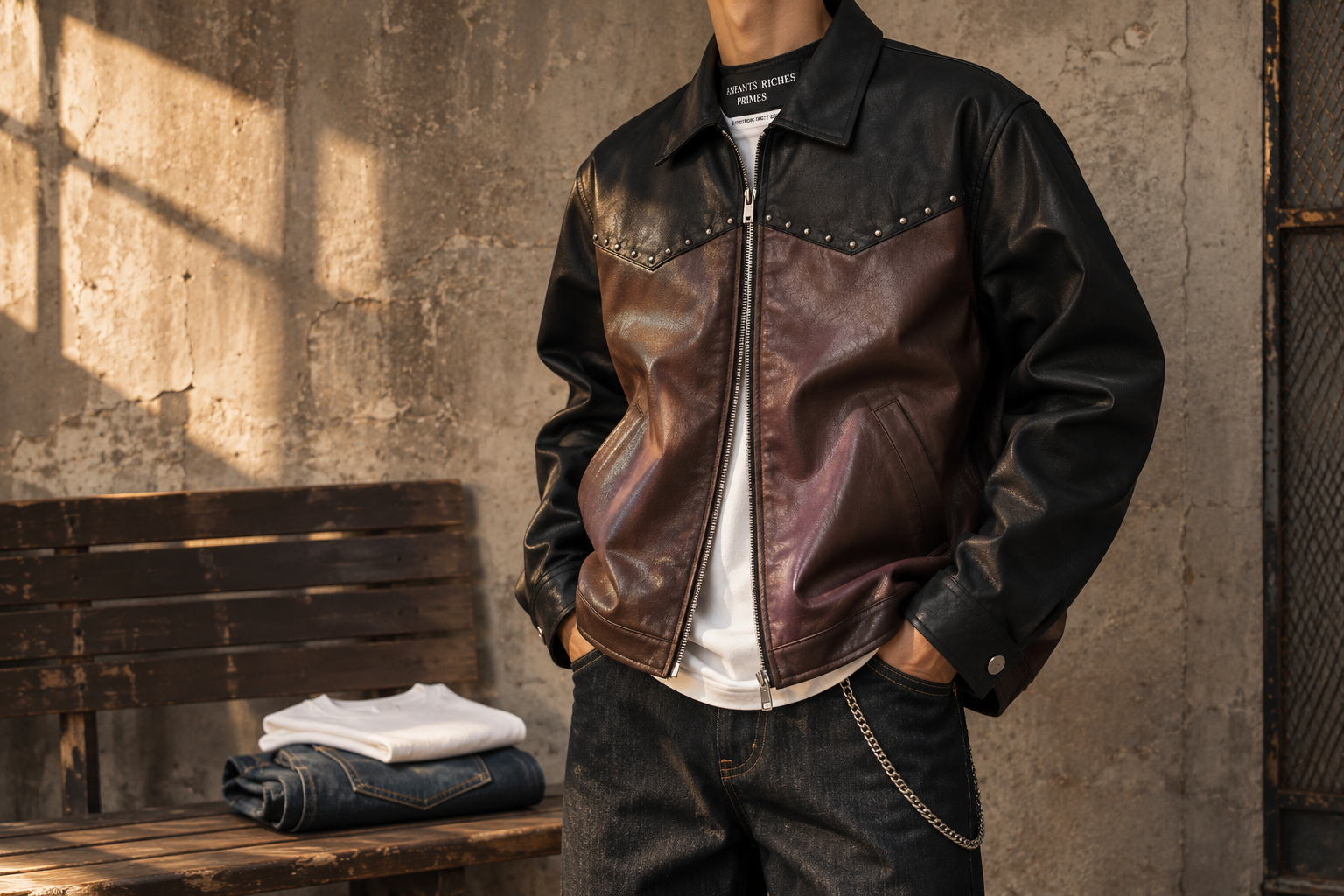
This jacket is best styled around black, dark brown, and silver details. Black covers the collar, shoulders, and sleeves, while dark brown is concentrated on the front body. The curved chest seam and silver studs further enhance the vintage streetwear feel. When styling, maintain this dark layering and avoid adding too many bright colors, letting the cropped silhouette and paneled structure be the visual focus. 
Start with the overall color palette
The safest base colors are black, white, dark blue, and gray. Black can echo the sleeves and collar, dark blue jeans continue the dark tones in the image, and a white inner layer brightens the zipper area and hem edge.
If you want a more vintage look, try these combinations:
- Pair the black-and-brown jacket with an off-white or pure white crew-neck top for a clear light-dark contrast.
- For bottoms, choose dark blue or black straight-leg jeans, avoiding overly wide legs to prevent the cropped jacket from looking weighed down.
- Shoes can stay black or dark brown; they don't need to be more eye-catching than the jacket.
- For accessories, prioritize silver metal elements to echo the chest studs and central zipper.
Use the cropped silhouette to create layers
The jacket's hem sits near the waist, and the inner top peeks out from the zipper opening and hem. This styling divides the black-brown colorblock, white inner layer, and dark pants into three clear zones, making the layering more obvious than when fully zipped.
The inner layer should avoid large, complex patterns. A solid-colored top keeps the curved chest seam intact and doesn't compete with the stud details. If you want more layering, let the top's hem show slightly, but keep it short to avoid weakening the cropped proportions.
Put the stud details at the visual center
The curved chest seam and row of silver studs are the jacket's most distinctive decorative focus. When styling, keep the jacket semi-open so the central metal zipper, inner layer, and chest structure are all visible; if fully open, the front paneling should still look neat—don't pile on too many necklaces or large badges.
The snap buttons on the cuffs are best kept simple. For a sharper look, tighten the cuffs to define the wrists; with a slightly looser inner layer, you can leave them relaxed for a more casual street vibe. The key here is adjusting the silhouette, not adding more decoration.
Three suitable styling directions
The first is a clean streetwear look: white crew-neck top, dark straight-leg jeans, and black shoes. White brightens the outfit, while the dark blue denim connects the brown front and black sleeves—easiest to pull off.
The second is vintage workwear: gray or beige top, black cargo pants, and dark brown shoes. Neutral colors tone down the strong decorative feel of the studs, and the cargo pants' pocket structure echoes the jacket's slash pockets.
The third is a rock-inspired dark combination: black top, black jeans, and silver accessories. This direction amplifies the jacket's black sections and metal details. Keep one light area visible, like the top's hem or shoe sole, to avoid losing depth.
How to highlight the jacket in displays
For flat lays or outfit displays, place the jacket in the center of the frame, with the zipper, chest seam, and side slash pockets fully visible. A white top can be placed under or inside the jacket as a bright divider; dark jeans spread out below to help viewers quickly understand the overall proportions.
The background should have a wooden, taupe, or concrete texture—these colors complement the black-brown palette without stealing attention from the clothing. Metal accessories can be placed sparingly near the zipper or studs, but avoid covering the frame, as that would weaken the jacket's structural details.
Overall, the key to styling this jacket isn't adding more elements but controlling the number of colors, maintaining the cropped proportions, and letting the black sleeves, dark brown front, and silver metal details present themselves in sequence.
Daniel Reyes is Editor-in-Chief, covering cross-border shopping agents, QC photo review, warehouse consolidation, and shipping-line comparison. They write most of the agent-fee and shipping-line explainers, maintain the desk's five-point scoring standard, and sign off on every published score. Each review receives two checks: the order log of agent fee, QC time, shipping line, and arrival date, followed by the bench notes. Before a new score goes live, Daniel compares it with the last six months of retests, connecting the review's explanations, test records, and scoring checks.