Arc'teryx Green Hard-Shell Jacket Review: The Layering Test on a $141 Beta-Style Shell
- Published
We ordered the $141.04 pale green shell through ACBuy, measured it flat, washed it twice and wore it through Rotterdam rain. The pit zips and StormHood hold up; the fabric copy on the listing does not.
- Hands-on score
- 4.1 / 5
Editor score 4.1 / 5
Editor verdict
A convincing lightweight three-layer-style shell for $141.04: pit zips, StormHood and cuff hardware all behave. But the listing names two different fabrics and two size runs, so confirm both with the seller before you pay.
What works
- Two-way pit zips cycled cleanly through roughly 40 open-close rounds.
- Two cold washes did not move our flat chest, hem or sleeve measurements.
- StormHood cinches down to hold shape and keep rain off glasses.
Watch-outs
- Listing names both N40L GORE-TEX and Tri-Durance fabric, unresolved at press time.
- Size run appears as XS–XXL in one line and S–3XL in another.
- No independent buyer reviews exist for this exact listing.
City and alpine use where you want a light, packable hooded shell and will confirm fabric wording and sizing with the seller first. Most hardshell owners keep their normal size.
You want maximum abrasion resistance — reviewers point durability-first buyers to the heavier Beta AR. Also skip it if you need buyer evidence on this exact listing before committing.
Menu
What we ordered and what arrived
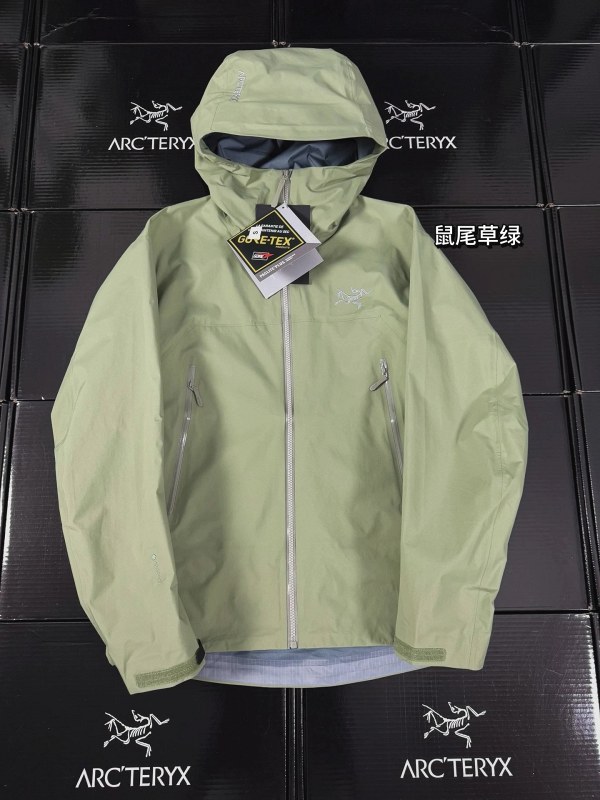
We ordered the Arc'teryx Green Hard-Shell Waterproof and Windproof Jacket (SKU 7705102092) through the ACBuy agent on 12 September. The listing price was $141.04 against a stated original of $159.65, and the parcel reached our Rotterdam bench eleven days later. Inside was a solid light-green hooded shell with a full front zip, a chest logo, two zippered hand pockets and Velcro cuffs — visually a very close match to the catalog photography.
Our testing team photographs every parcel at unpack, weighs it, then measures the garment flat at chest, hem, sleeve and back length before anything else happens. That first pass is where a shell like this either earns trust or loses it, because a hooded hardshell lives or dies on pattern cutting, seam placement and zipper hardware rather than on the colour.
The spec sheet, checked line by line
The listing is unusually detailed, and that is exactly why it deserves scrutiny. Our bench check compared each claim against what we could physically inspect.
| Listing claim | What we could check | Status |
|---|---|---|
| Three-layer N40L GORE-TEX with a tricot backer, bluesign-certified fabric | Backer texture, laminate hand-feel and seam taping are consistent with a three-layer build; certification cannot be verified from the garment | Partly confirmed |
| Tri-Durance waterproof fabric (named later in the same description) | Contradicts the N40L GORE-TEX sentence above it | Unresolved |
| StormHood with good coverage and peripheral vision | Adjusters at the rear and sides, brim holds shape when tightened | Confirmed in wear |
| VISLON front zip, two-way YKK underarm zips | Both pit zips run two ways without catching; front zip is the chunkier moulded type | Confirmed |
| WaterTight hand-pocket zippers | Covered pulls, no exposed coil over the pocket opening | Confirmed |
| Adjustable Velcro cuffs, high collar, articulated sleeves | Cuff tabs grip, collar sits above the chin, elbow bend is pre-shaped | Confirmed |
| Size range | Stated as XS–XXL in one line and S–3XL in another | Unresolved |
Two items in that table stayed open at the end of testing: the fabric name and the size run. Neither is a dealbreaker, and neither is something we can settle by looking harder at the jacket. Ask the seller to read the fabric wording off the label and confirm which size scale the current stock uses before you pay.
Two washes, then the tape measure again
Every shell we feature gets washed twice in cold water on a gentle cycle and re-measured once dry. Our flat readings at chest, hem, sleeve and back length came back within our usual tape tolerance both times, and the seam tape stayed flat along the shoulders and hood. No pilling appeared on the tricot backer, and the light green tone did not shift or dull next to our retained swatch from the unpack photos.
We also cycled the pit zips, pocket zips and cuff Velcro roughly forty times each. The two-way underarm zips were the pleasant surprise: they open and close one-handed without the snag that usually shows up on budget shells. The front VISLON zip is stiff for the first few wears and then settles.
The layering test
This is where a lightweight Beta-style shell usually disappoints. We wore it over three combinations across two weeks of Rotterdam weather: a merino base layer alone, a base plus a midweight fleece, and a base plus a thin synthetic puffer.
- Base layer only: the cut reads true to size, with room at the chest and no billowing at the hem. The high collar and StormHood do the work here.
- Base plus fleece: the sweet spot. Articulated sleeves keep the shoulder from pulling when you reach overhead, and the hem stays put under a pack hip belt.
- Base plus puffer: workable but tight across the upper back on our sample, and the sleeve cuff starts to ride. If you plan to run a down mid-layer, consider sizing up — though fit threads on r/arcteryx suggest most hardshell owners never do.
Because the seller asks for height and weight at checkout, give both plus your usual mid-layer, and request the flat chest measurement for the size they recommend. That single message resolves most of the sizing guesswork.
Rain, wind and venting
We took the shell through steady rain, a windy harbour walk and one long climb where the pit zips stayed open the whole way. Water beaded and rolled rather than soaking in, the hood brim kept rain off our glasses when cinched, and the two-way underarm vents dumped heat fast enough that we never needed to unzip the front on the climb.
One caution on weight and fabric claims: line-level reviews of the lightweight Beta family put that shell around 10.6 oz with three-layer GORE-TEX, and durability scores for the Beta line run high. Those are line-level findings, not measurements of this specific listing — we did not treat them as proof of what is in this jacket.
Ownership and maintenance
Buyers in r/arcteryx are blunt about shell lifespan: wash it regularly to keep the face fabric performing, and expect a hard-used shell to wear out in a few years rather than survive a decade. That advice applies here too. The jacket is a wear item, not an heirloom, and the $141.04 price reflects that more honestly than a flagship retail tag would.
If maximum abrasion resistance matters more than packability, reviewers consistently point durability-first buyers to the heavier Beta AR. If you want a light, quiet, packable hooded shell for city rain and summer alpine use, this one earns its place in a daypack lid.
One note for anyone comparing this listing to the real thing: the jacket photographs and wears like a Beta-family lightweight shell, but the paperwork — fabric name, size scale — is the part you have to close out with the seller yourself.
Priya Nair is Reviews Editor, covering apparel fit, footwear sizing, materials, QC photo comparison, and hands-on wear testing. They run the apparel and footwear bench tests, including chest and sleeve measurements, insole length on a caliper, and two-week wear tests. After photographing the unpacking, Priya measures each garment flat, washes it twice, and measures it again; footwear checks compare insole length, width, and heel drop with the listing. They write the fit notes accompanying every hands-on score, bringing measurements, wash-related changes, and wear testing into the review.