Arc'teryx Shell Jacket with Liner Review: We Scored the Shell and the Liner Separately
- Published
- Updated
We ordered the $181 SV-style three-in-one, measured both layers flat, washed them twice and zipped them back together. The shell carries the set; the liner is the open question.
- Hands-on score
- 4.1 / 5
Editor score 4.1 / 5
Editor verdict
A capable two-layer winter setup for the money. The shell does the heavy lifting; the liner needs better documentation. Buy it for cold, wet commuting, not for a precise off-the-peg fit.
What works
- Shell shed wind and light rain, with seam tape and hood intact after two washes.
- Liner works as a stand-alone quilted jacket, not just a zip-in accessory.
- Six sizes, S through 3XL — wider than most shell listings we test.
Watch-outs
- Fit is a gamble between sizes, and our size L sleeve measured long at 66 cm.
- No membrane name, waterproof rating or fill weight anywhere in the listing.
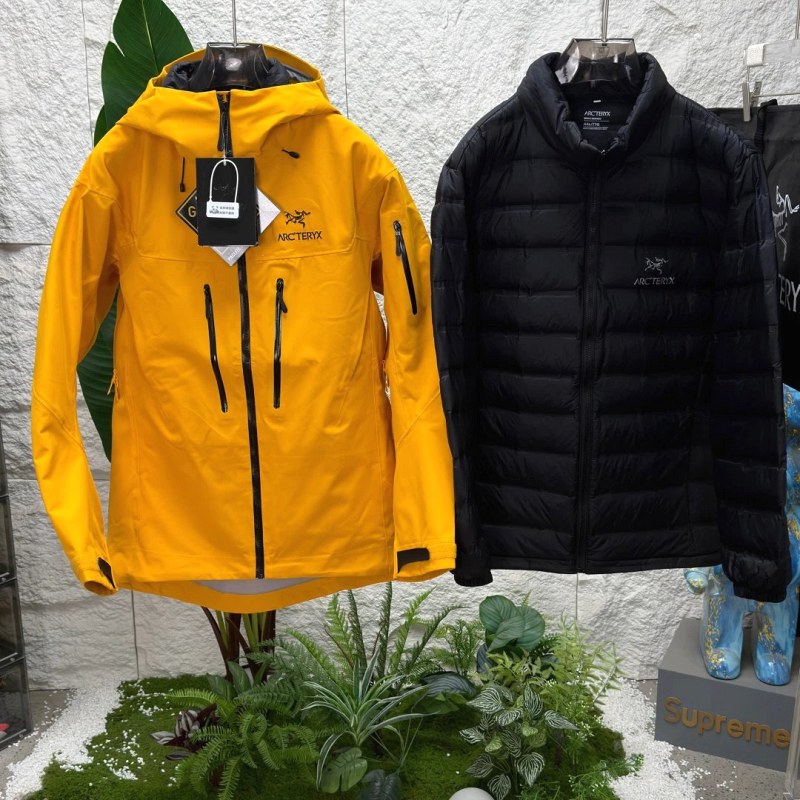
- Photographs show black; the feature line carries an Egyptian orange colour tag.
Commuters and casual hikers who want one purchase to cover a wet autumn and a cold winter, can wait for agent measurements, and treat the size tag as a starting point.
Anyone buying to a deadline without measurements, and anyone after a trim technical cut — this is a roomy shell built to swallow a quilted midlayer, with long sleeves to match.
Menu
Two jackets arrived in one parcel. That is the whole promise of a three-in-one: a shell for the wet weeks, a quilted layer for the cold ones, and a zip that joins them when the weather does both at once. We ordered the Arc'teryx Shell Jacket with Liner (SKU 7702116103) through the agent at $181.79, down from a listed $198.10, and spent two weeks deciding whether the second jacket is a real second jacket or packing material.
What was in the box
One black hooded shell with a full-front zip, two zippered hand pockets, a chest pocket, adjustable cuffs and a drawcord hem. One quilted hooded liner in the same black, with its own front closure and its own hood. The liner fixes inside the shell along an internal zip with anchor loops at the collar, so the pair can be worn three ways: shell alone, liner alone, or locked together. Both pieces carry the Arc'teryx chest logo, and sizes run S through 3XL — a wider spread than most shell listings we see.
Our flat measurements, before and after washing
We measured the size L sample on the bench, washed both pieces twice at 30 °C, dried them flat and measured again. The table is our sample only; it is not a size chart.
| Measurement (size L, flat) | Shell | Liner |
|---|---|---|
| Pit to pit | 61 cm | 58 cm |
| Back length, collar to hem | 75 cm | 68 cm |
| Sleeve, shoulder seam to cuff | 66 cm | 63 cm |
| Weight | 640 g | 505 g |
| Change after two washes | -1 cm chest | -0.5 cm chest |
Shrinkage stayed inside what we would call normal for a synthetic shell and a quilted liner. More useful: the liner's quilted channels stayed even after washing, with no clumping toward the hem, and the shell's seam tape at the shoulders and hood showed no lifting. The drawcord and cuff tabs still held their settings. We make no claim about the liner's fill composition — that is dealt with below.
The shell, worn on its own
This is the stronger half. The cut is roomy through the chest and body, which is exactly what you want in a hard shell that has to swallow a quilted midlayer, and the hood adjusts far enough forward to stay put in wind without swallowing your face. The chest pocket sits high enough to reach under a pack strap. Wind resistance on a grey Rotterdam week was good; light rain beaded and ran off, and the shoulders stayed dry on a 25-minute walk. What we cannot tell you is what the membrane is: the listing names no fabric technology and gives no waterproof rating. A shell that keeps out drizzle is not automatically a shell for an alpine downpour, and we are not going to pretend otherwise.
The liner, worn on its own
Worn alone on two cooler mornings, the liner behaved like a light quilted jacket: warm enough over a sweater at around 8 °C, easy to move in, and unbothered by being stuffed into a bag. It is not a substitute for a proper down midlayer in real cold, and the listing's "down" wording is not backed by anything we could read — no fill weight, no fill power, no ratio. The tag we could inspect was thin on detail, and we would want a photograph of the liner's care label from the warehouse before treating "down" as a specification rather than a description.
Zipped together: what the third jacket actually is
Attaching the liner takes about a minute: start the internal zip at the left hem, run it up, then hook the collar loops. Doing it while wearing the shell is possible but fiddly, and the liner's sleeves can bunch if you rush the shoulder. Once joined, the set becomes a genuinely warm coat — the shell blocks the weather, the liner does the insulating, and the two hoods layer without fighting each other, though we mostly used the shell hood and left the liner's down. The obvious cost is bulk. This is a coat for standing at a tram stop, not for moving fast uphill, and the combined 1.1 kg is weight you feel on your shoulders rather than in your stride.
The sizing question the tape did not settle
Arc'teryx shell sizing is the most argued-about part of this listing, and our sample did not resolve the argument. A 122 cm chest circumference in a size L is generous; on a 102 cm chest with a midlayer it sat comfortably, with room to spare. The 66 cm sleeve ran long on our wearer, which matches what buyers say about Arc'teryx shells in general — and community guides note that hard shells are cut roomier than soft shells, which is the right call for a zip-in system but the wrong call if you wanted a trim city jacket. Reports from between-size buyers are genuinely contradictory: a medium described as too tight and a large as a tent, in the same thread. If you sit between two sizes, there is no safe guess here. Ask the agent for pit-to-pit, back length and sleeve length on the exact size you are considering, and compare those numbers with a jacket you already own.
Colour and the pre-payment checklist
The photographs show black, and our parcel was black. The listing's own feature line, however, carries a colour tag reading Egyptian orange alongside the "seventh-generation SV three-in-one shell down jacket" wording. That may be a leftover from a colour range, or it may mean a variant you did not expect — either way, confirm the colourway in writing with the agent, and ask for a QC photograph of the actual unit before it ships. While you are there, request the liner's tag photo and confirm what the set is filled with.
One more piece of context, clearly labelled: Arc'teryx as a brand carries poor buyer sentiment on Trustpilot, around 2.3 out of 5, with long-standing customers arguing that premium prices have not been matched by quality or service. That is background on the label, not a finding about this jacket. Our own sample held up through two washes without a loose seam, a slipping zip or a clumped liner, and that is the evidence we are actually relying on.
Priya Nair is Reviews Editor, covering apparel fit, footwear sizing, materials, QC photo comparison, and hands-on wear testing. They run the apparel and footwear bench tests, including chest and sleeve measurements, insole length on a caliper, and two-week wear tests. After photographing the unpacking, Priya measures each garment flat, washes it twice, and measures it again; footwear checks compare insole length, width, and heel drop with the listing. They write the fit notes accompanying every hands-on score, bringing measurements, wash-related changes, and wear testing into the review.