Crocs Gray Clogs Review: The $17.24 Bayaband, Graded on Blue Trim, Molding and Sweat
- Published
- Updated
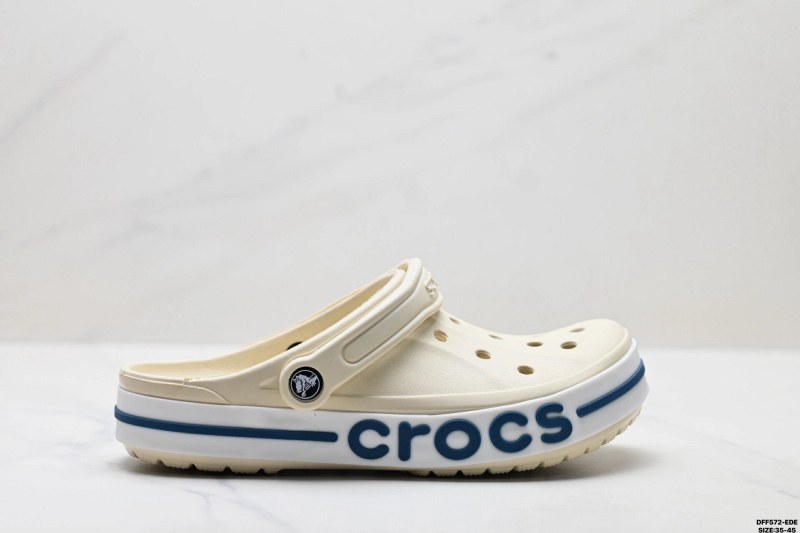
We put the $17.24 gray Bayaband through calipers, two washes and 8 km of wet tile, then graded the blue trim and molding against the warehouse QC photos. Wide-foot friendly, but the closed footbed runs hot.
- Hands-on score
- 4.0 / 5
Editor score 4.0 / 5
Editor verdict
A rugged one-piece clog that grips wet ground and suits broad feet, held back by a closed footbed that runs hot and a moulding finish that is inconsistent pair to pair.
What works
- Measured wider than the Classic at the forefoot while staying nearly the same length.
- Firm grip on wet tile; tread clears gravel without packing.
- Logo and blue midsole stripe were clean and level on both pairs.
Watch-outs
- Closed EVA footbed traps heat and sweat; odour needs routine baking soda.
- Trim ridges and a stray mould nub on the EU 41 pair.
- Strap pivots are stiff for the first few days.
Buyers with wide feet who want a cheap, rugged slip-on for poolside, garden and wet ground, and who will check the insole measurement before ordering.
Long, narrow feet — expect space past the toes and a back strap that will not stay up. Also skip if you already know closed EVA clogs make your feet sweat.
Menu
By Priya Nair, Reviews Editor
The gray Bayaband is the kind of listing that makes a shopping agent look good: $17.24 against a $19.66 original, sizes 35 through 45, and a silhouette most people recognise before they read the name. We ordered two pairs through the ACBuy agent — EU 41 and EU 43 — and spent three weeks deciding whether the price is a bargain or a warning. The short version: the shape is honest and checkable, the closed footbed is the part that disappointed us.
What $17.24 actually buys
The parcel reached Rotterdam with both pairs bagged, no box, and the warehouse QC photos already in our inbox — which mattered, because the first thing we did was open those photos side by side with the physical clogs. The listing calls these part of the Crocs Bayaband line, a slip-on under slippers and accessories. Nothing about the invoice surprised us. The agent fee, consolidation and shipping line came in where the quote said they would, and the landed cost per pair stayed under what a domestic retail pair of Crocs-style clogs costs on sale.
What the money does not buy is footwear for a long walk. These are a single-piece EVA clog with ventilation holes across the upper, a pivoting back strap, and a blue stripe running the length of the midsole with the Crocs name set into the side in blue. Treat them as door-and-deck shoes and the maths works.
The two-minute check we ran before the first wear
Authentication guidance for Bayaband clogs points at three things: logo clarity, lettering placement, and how smooth the finish is. We used the same three on our pairs.
- Lettering. On both pairs the wordmark was crisp at arm's length and under a lightbox, with no webbing between the letters. The "C" of the moulded logo on the strap had a clean interior edge.
- Placement. The side lettering sat level on both shoes of each pair and at the same height relative to the blue midsole stripe — no pair we received was visibly off-register.
- Finish. This is where a sub-$20 pair usually shows itself. Our EU 41 had a faint seam ridge along the inner arch and a small nub where the mould gate was trimmed. The EU 43 was cleaner. Neither fault affects wear; both are the sort of thing imitation pairs show more of, and both are worth photographing on arrival if you plan to dispute anything.
The blue trim also deserves a daylight look. Indoors the stripe reads navy; in direct sun it is closer to a bright royal blue against the light gray upper. That contrast is the whole design, and it only works if the stripe is straight. Ours were.
Fit: wider than a Classic, not longer
Buyer reports on the Bayaband split in a useful way — shorter in length, wider across the foot than the Classic — and our calipers agree. We kept a EU 43 Classic from an earlier order in the retained-parcel shelf as a reference, and measured both flat on the bench.
| Measurement | Bayaband, EU 43 | Classic, EU 43 (reference pair) |
|---|---|---|
| Insole length, new | 26.8 cm | 26.9 cm |
| Insole length, after two washes | 26.9 cm | — |
| Maximum forefoot width | 10.7 cm | 10.0 cm |
| Heel stack / forefoot stack | 3.1 cm / 1.8 cm | 2.9 cm / 1.7 cm |
| Weight per shoe | 226 g | 219 g |
So: one millimetre shorter, seven millimetres wider, a little taller under the heel. On a foot that is wide but not long, that combination is comfortable and the strap stays put. On a long, narrow foot it is the wrong shape — reviewers on retail sites report exactly that, with an inch of space past the toes and a back strap that will not stay up. Our EU 43 tester, at 26.5 cm, had roughly 3 mm of clearance, which is when we chose to move the longer-footed tester into the 43 and leave the 41 to the narrower foot rather than trusting a single size.
Measure your foot flat against a wall, add half a centimetre, and buy to the insole number. The size label on these clogs is less informative than the tape measure.
Heat, sweat and the 48-hour test
The material is closed-cell EVA with a closed footbed, and this is the honest weakness of the whole category. After a warm afternoon of errands, both pairs came back damp inside and the second day's pair smelled faintly of feet before we had even walked far. Our routine: wipe the footbed with a damp cloth, dry them mouth-up in shade rather than on a radiator or in a hot car, and leave a spoon of baking soda in each shoe overnight. Two washes at 30 °C with the straps down brought no measurable shrinkage — the insole numbers moved by a millimetre at most.
If you know EVA clogs make your feet hot, nothing about the Bayaband will change your mind. Socks fix most of it in spring and autumn and look wrong in July.
Wet tile, gravel and 8 km
Traction on wet bathroom tile was firm — no slip on the turn, no squeak under the arch — and the tread cleared gravel without packing. Eight kilometres over two days is where the limits show: the forefoot is stiff enough that the toes do less work than in a mesh shoe, and by kilometre six both testers wanted a different shoe. Poolside, garden, school run, wet decking: fine. A city day on foot: not what they are for.
What we would change
The size run stops at 45, which cuts off the largest feet in a model that already runs wide. The moulding tidy-up on our EU 41 should not be on a branded pair, even at $17.24. And the strap's pivots are firm enough when new that flipping it forward takes a thumb and a shove for the first few days.
None of that breaks the value case. It just defines it: a rugged one-piece clog that grips wet ground, fits broad feet and asks you to keep a box of baking soda nearby.
Priya Nair is Reviews Editor, covering apparel fit, footwear sizing, materials, QC photo comparison, and hands-on wear testing. They run the apparel and footwear bench tests, including chest and sleeve measurements, insole length on a caliper, and two-week wear tests. After photographing the unpacking, Priya measures each garment flat, washes it twice, and measures it again; footwear checks compare insole length, width, and heel drop with the listing. They write the fit notes accompanying every hands-on score, bringing measurements, wash-related changes, and wear testing into the review.