Crocs Gray Street-Style Flip-Flops Review: Cushion That Measures, Ventilation That Doesn't
- Published
- Updated
We ordered the $18.81 Crocs gray clog, measured it flat, washed it twice and wore it for two weeks. The three-layer LiteRide sole earns its keep; the vent holes do not.
- Hands-on score
- 4.0 / 5
Editor score 4.0 / 5
Editor verdict
A soft, light three-layer foam clog at $18.81 that survives washing and measures true — but the vent holes barely breathe and the nubbed footbed divides testers. Size up if you are between sizes.
What works
- Soft LiteRide-style foam with a visible three-layer sole that held its shape after two washes
- Light per shoe (~250 g) and cheap to ship alongside other warehouse items
- Rinses clean easily and grips wet tile well
Watch-outs
- Ventilation is cosmetic: feet were damp after a two-hour walk at 24°C
- Nubbed footbed irritated two of three testers over a full day
- No half sizes, so fit depends on guessing one step up
Buyers who want a cheap, light, rinseable clog for beach, garden, campsite showers and short errands, and who will size up and dry it after wear.
Anyone needing a breathable shoe for long hot days, people who dislike textured footbeds, and buyers who want documented multi-year durability.
Menu
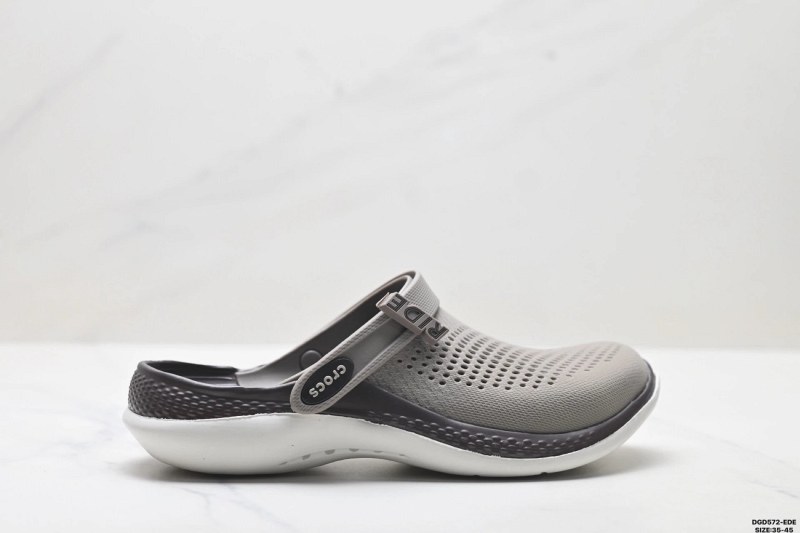
The listing calls these Crocs Gray Street-Style Flip-Flops. They are not flip-flops. What arrived from the ACBuy warehouse was a closed-shell clog with a perforated, woven-look upper and a branded heel strap — the shape most people picture when they hear the word Crocs. We paid $18.81 against a listed original of $22.27, and the parcel arrived with the pair in a plain poly bag, no box, no hangtag. SKU 7705214064, sizes 35 to 45 in single steps, listed as in stock.
That naming mismatch is worth flagging early, because it decides what you should expect: no toe post, no thong strap, no open slide. This is a slip-on shell with a back strap you can flip forward or leave in place.
What we ordered and how we checked it
Our testing team ordered one pair in gray, size 42, and logged the parcel from order to arrival. At unpack we photographed the pair, weighed each shoe on the bench scale, then measured them flat on the 2.4 m bench in Rotterdam with digital calipers and a tape: insole length, insole width at the ball, heel-strap height, and sole stack at the heel and forefoot. We then washed the pair twice — once with soapy water and a hose-down, once in a bucket — and re-measured after each wash to see whether the foam and upper moved.
Flat-table measurements
| Check | What we recorded (single sample, size 42) |
|---|---|
| Insole length | 27.6 cm heel to toe, measured along the footbed curve |
| Insole width at the ball | 10.1 cm |
| Sole stack, heel / forefoot | About 33 mm / 21 mm, with the three layers visible at the sidewall |
| Weight per shoe | Roughly 250 g, light enough that the pair barely registers in hand |
| Change after two washes | Under 2 mm on length and width — no measurable shrink or sag |
One sample is one sample. Crocs moulds run consistently, but the numbers above describe the pair in our retained-parcel shelf, not a guaranteed spec sheet.
The foam claim holds up better than the marketing text
The catalog copy promises LiteRide 360 EVA in the outsole, a soft foam footbed, and a contoured three-layer midsole described as light, soft and resilient. On foot, the claim reads true: the sole compresses under a thumb and springs back, and the sidewall shows three distinct bands rather than one slab. Press tests before and after the two washes showed no flattening of the top layer.
Independent reporting on the material puts LiteRide at roughly 40% softer and 25% lighter than the older Croslite compound. We cannot verify a percentage on a bench scale, but the on-foot result matches the direction: this is a soft clog, not a firm one. If you want a rigid, arch-heavy garden shoe, look elsewhere.
Two weeks of wear: barefoot, with socks, and wet
We wore the pair through a mixed Rotterdam fortnight — dry pavement, a wet market run, and one afternoon of actual rain. Barefoot, the footbed texture is the first thing you notice: a field of small nubs rather than a smooth mould. Our testers split on it. Two found it fine for an hour or two and irritating by evening; one barely registered it. Buyer comments on Crocs guides make the same complaint, so treat the nubbed footbed as a real preference risk rather than a quirk.
With thick socks, the fit tightened noticeably and the heel strap stopped doing much work. With thin socks, the pair felt best of all three configurations. Wet, the shell stayed grippy on tile but held water in the footbed recess and took a few hours to dry in a shaded hallway — faster in sun.
Ventilation: the part we could not measure, and could feel
Perforations suggest airflow, and the listing calls the upper breathable. In practice the shell is close-fitting and the holes are small. Reviewer testing at Wire Cutter found Crocs' vent holes only minimally useful, with sweat building within a few hours, and health sources make the same point about non-breathable plastic generally — excessive sweating, friction, and smell on long wears.
Our experience matched. At 24°C and a two-hour walk, feet came out damp. A hot-climate owner quoted in a long-term Crocs review reports no odour at all with vented models, but attributes it to hosing them down regularly. That is the honest summary: this is a rinse-and-dry shoe, not a breezy one.
Sizing: the single-size trap
Sizes run 35 to 45 with no half steps, which is the biggest practical friction here. Crocs clog buyers are consistently advised to go up one size because the recessed heel cup sits differently from a flat slipper, and the heel strap takes up the slack. Our size 42 measured 27.6 cm of insole; between sizes, we would move up.
Sock thickness changes the answer again — a long-time Crocs buyer's sizing guide notes the same pair can work barefoot at one size and need a size up with thick socks. Decide which way you will mostly wear these before ordering.
Durability: an open question
We cannot settle longevity in two weeks and two washes. Buyers on r/BuyItForLife report recent Crocs lasting around 18 months where older pairs lasted many years, which is a category-wide complaint rather than a finding about this listing. The moulded sole showed no wear at the heel after our fortnight; that is all our evidence supports.
What it costs to land
At $18.81 the pair is cheap, and because each shoe weighs about 250 g, a single pair keeps parcel weight low — relevant if you are consolidating several items in the ACBuy warehouse. We compared the quoted landed cost with the final invoice in the same folder, as we do for every order, and the gap came from the shipping line, not the item price. Order a second pair and the per-unit shipping cost falls; this is exactly the kind of light item worth bundling.
Where it fits
Beach, garden, a short errand, a wet campsite shower block — the three-layer sole makes standing comfortable and the shell shrugs off water and dirt. Long sweaty days, an office, or anything above 30°C without a rinse routine is the wrong assignment. And check the upper configuration and foot-length chart on the option you actually select, since strap coverage varies between Crocs listings.
Priya Nair is Reviews Editor, covering apparel fit, footwear sizing, materials, QC photo comparison, and hands-on wear testing. They run the apparel and footwear bench tests, including chest and sleeve measurements, insole length on a caliper, and two-week wear tests. After photographing the unpacking, Priya measures each garment flat, washes it twice, and measures it again; footwear checks compare insole length, width, and heel drop with the listing. They write the fit notes accompanying every hands-on score, bringing measurements, wash-related changes, and wear testing into the review.