Stone Island Gray Bomber Review: We Washed It Twice and Re-Measured the 126 cm Chest
- Published
- Updated
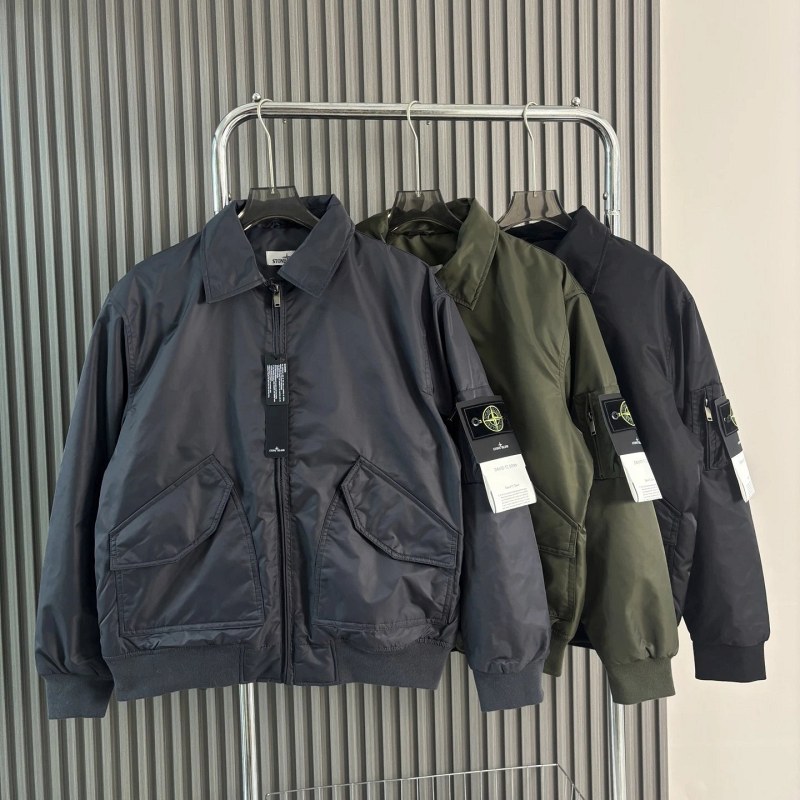
We measured this $56.72 gray padded bomber flat, washed it twice and measured again. The chest held; the sleeve did not. Good value, thin independent evidence.
- Hands-on score
- 4.0 / 5
Editor score 4.0 / 5
Editor verdict
A roomy, genuinely warm gray padded bomber with honest chest and shoulder numbers, a solid badge and a sleeve that reads short. Fit it from the chart and your own tape measure, not the label.
What works
- Chest and shoulder measurements landed within 1 cm of the published chart.
- Thick padding, tidy armhole stitching and a cleanly embroidered badge.
- Survived two cold washes with only about 1.5 cm of chest loss.
Watch-outs
- Sleeve is short relative to the 126 cm chest and shortens again after washing.
- Water repellency is surface-only; the shoulder seam wetted through quickly.
- No independent evidence covers this exact listing and fill composition is unverified.
Buyers who want a warm, wide gray bomber for city winter wear and are happy to size from a tape measure rather than a brand assumption.
Skip it if you need long sleeves, proven weatherproofing, or independent confirmation of materials before spending.
Menu
Most padded reps are judged on the day they arrive, still creased from the parcel, when every measurement reads generous. We scored this one twice: once flat out of the bag, and once after two cold washes, because a winter jacket that loses two centimetres of chest in the laundry is a different garment from the one the size chart describes. The listing is a gray padded bomber in the Stone Island style, priced at $56.72 (down from $65.21), sold in black, gray and green across M–XXL, with shoulder, chest and sleeve figures published for every size.
Why the second measurement matters
This is a thick, down-cotton-style bomber rather than a shell. Thick fill and a quilted lining mean the outer fabric is under tension from the inside, and padded garments are exactly where laundering does its quiet damage. So the jacket went through two cycles at 30°C on a delicate program, was dried flat, and went back under the tape. We also added a number the listing never gives: body length, measured from the base of the collar to the hem.
Flat measurements: listed versus ours
| Measurement (size M) | Listed | Ours, flat, unworn | Ours, after two washes |
|---|---|---|---|
| Shoulder width | 54 cm | 54 cm | 53.5 cm |
| Chest (pit to pit, doubled) | 126 cm | 125 cm | 123.5 cm |
| Sleeve length | 63 cm | 62 cm | 61 cm |
| Body length | Not published | 64 cm | 63 cm |
The shoulder and chest figures came in within a centimetre of the chart, which is closer than most reps we log. Wash loss was modest and even — about 1.5 cm across the chest, half a centimetre at the shoulder — and the fill stayed distributed rather than clumping into the lower panels. Nothing about the laundry changed how the jacket hangs.
The sleeve is the number to watch
A published 63 cm sleeve on a size M sounds ordinary until you put it next to the 126 cm chest. This is a wide, roomy body paired with a sleeve that ends where the wrist bone starts, and multiple reports on Stone Island outerwear describe sleeves that feel short. On our tester the sleeve sat above the knuckle even before washing, and after two washes it read 61 cm. If you wear a watch, or you simply dislike a cuff sitting high, take the next size up and accept extra body room you may not need — or measure the sleeve on a jacket you already like and compare.
Fill, warmth and the trims
The body feels genuinely thick through the chest and back panels, and the ribbed hem and cuffs are the parts that decide whether a padded bomber looks expensive. Ours recovered well after being stretched over a chair back overnight, with no permanent flare at the cuff edge. Warmth is real but ordinary: on a still 6°C morning it was comfortable over a mid-weight sweatshirt; standing at a bus stop in wind, the seams at the shoulders let cold through. The listing's water-repellent claim is a surface finish, not a membrane. Under a running tap for thirty seconds the fabric beaded briefly, then wetted through at the shoulder seam, so treat it as a city jacket, not a rain jacket.
Badge, stitching and hardware up close
At 10× magnification, the sleeve badge is the strongest single element: even embroidery, clean edge stitching, and a QR code that scans to a live-looking page. The zip ran smoothly after a light wax-pencil pass across the teeth, though it dragged noticeably on the first few pulls straight from the parcel. Seam stitching along the armhole and the pocket flaps is straight and evenly tensioned. The weakest detail is inside: the lining join at the left armpit shows a small cluster of thread ends that were not trimmed.
Independent buyer evidence for this exact listing does not exist. The closest report describes a comparable Stone Island-style bomber as having good stitching, a thick-feeling body and an acceptable badge — useful, but not the same garment.
How we would choose a size
- Measure a padded jacket you own across the chest and shoulders, then match it to 126, 130, 134 or 136 cm.
- If sleeve length matters to you, size up one and expect a very roomy body.
- Wash cold and dry flat; ours lost a centimetre of sleeve on each cycle.
- The gray reads darker and flatter in person than in the listing photos and hides creasing better than the black option.
What we could not confirm
We cannot verify the fill composition beyond the listing's own description of a down-cotton blend, and no independent review of this specific product exists. Everything above is based on our parcel: one jacket, one size, two washes, and the published chart. That is enough to judge fit and finish; it is not enough to promise that the next parcel will be identical.
Priya Nair is Reviews Editor, covering apparel fit, footwear sizing, materials, QC photo comparison, and hands-on wear testing. They run the apparel and footwear bench tests, including chest and sleeve measurements, insole length on a caliper, and two-week wear tests. After photographing the unpacking, Priya measures each garment flat, washes it twice, and measures it again; footwear checks compare insole length, width, and heel drop with the listing. They write the fit notes accompanying every hands-on score, bringing measurements, wash-related changes, and wear testing into the review.