Comparing Two White Cable-Knit Polos: Collar & Styling
- Published
- Updated
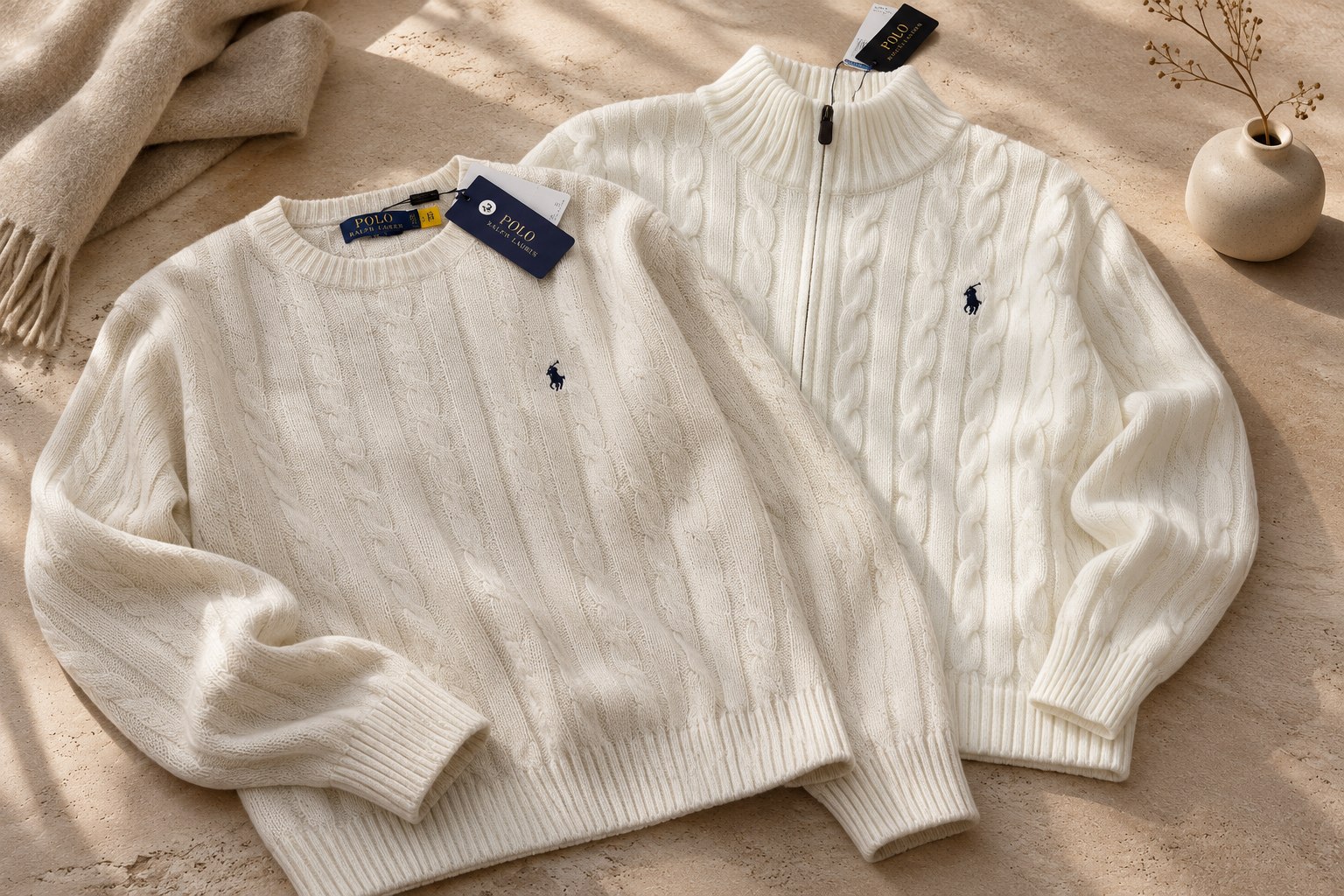
Cream-white cable-knit sweaters are best presented with a low-contrast, warm-toned approach. The two pieces in the image share a similar cream-white color, yet create layers through collar type and placement: the crewneck on the left is more relaxed and crisp, while the half-zip high-neck on the right has more pronounced vertical lines and a wrapped feel. For fall/winter wardrobes, use the crewneck as a base for daily layering, and the half-zip as a visual focal point. 
How collar differences affect styling
The crewneck on the left has ribbed trim at the collar, cuffs, and hem, giving a clean silhouette. It pairs well with a white or light blue shirt, letting the shirt collar peek slightly above the crewneck. For bottoms, choose medium-blue jeans, gray straight-leg trousers, or dark brown corduroy pants, using the warm-cool contrast to highlight the cream knit texture.
The half-zip high-neck on the right has a higher collar, with the zipper extending downward from the neck, drawing the visual center to the chest and neck. When styling, keep the inner layer simple, such as a tonal or light gray top, to avoid too many colors near the collar. Bottoms in dark gray, charcoal, dark brown, or dark indigo work well, as the darker base sets off the light sweater.
| Style | Visible details | Color pairing ideas |
|---|---|---|
| Crewneck | Ribbed crewneck, ribbed cuffs and hem, small pony logo on chest | Cream top with medium blue, gray, or brown bottoms |
| Half-zip high-neck | High neck, downward zipper, vertical cable texture, small pony logo on chest | Cream top with dark gray, dark brown, or dark indigo bottoms |
Display methods for cream-white knitwear
For wardrobe display or product flat lays, keep a slight offset between the two garments. Place the crewneck in the foreground to highlight its wider neckline and ribbed hem; position the half-zip behind or to the right, keeping the high collar, zipper, and vertical texture fully visible. Both should be face-up with sleeves naturally spread to let the cable texture become the main rhythm of the image.
The background can continue the warm cream tone from the image, creating a soft tonal relationship with the sweaters. Pairing with a beige scarf, light brown fabric, or matte pottery leans toward a warmer fall/winter atmosphere; for more clarity, switch to a light gray background or dark wood tray to make the cream edges stand out. Thin decorative elements like dried branches should be placed at the edges to avoid covering the collar, logo, and cable texture.
Outfit combination suggestions
For a casual look, choose the crewneck, a light blue shirt, medium-blue straight-leg jeans, and a brown belt. Let only a small part of the shirt collar and hem show to avoid weakening the sweater's presence.
For a more subdued look, choose the half-zip high-neck, dark gray trousers, and black or dark brown shoes. With the zipper partially open, the neck creates a more pronounced vertical opening; fully closed, it emphasizes the high-collar silhouette. Actual fit depends on cut and individual size; the current image only supports judgments on color, collar, texture, and display.
Overall, the two cream cable-knit sweaters are best presented with the idea of "tonal base, dark bottoms for contrast, and staggered detail display." The crewneck provides ease and versatility, the half-zip provides line and layering; displaying them side by side intuitively shows the stylistic difference between same-color knit pieces.
Daniel Reyes is Editor-in-Chief, covering cross-border shopping agents, QC photo review, warehouse consolidation, and shipping-line comparison. They write most of the agent-fee and shipping-line explainers, maintain the desk's five-point scoring standard, and sign off on every published score. Each review receives two checks: the order log of agent fee, QC time, shipping line, and arrival date, followed by the bench notes. Before a new score goes live, Daniel compares it with the last six months of retests, connecting the review's explanations, test records, and scoring checks.