Off-White Utility Trousers and Varsity Jacket Photos
- Published
- Updated
These images were taken and provided by a customer who purchased the items. The review below is based only on visible details in this buyer-photo set. It is useful for understanding how the pieces coordinate and which construction details are shown, but it cannot establish fabric composition, sizing, wear performance, price, durability, or authenticity. 
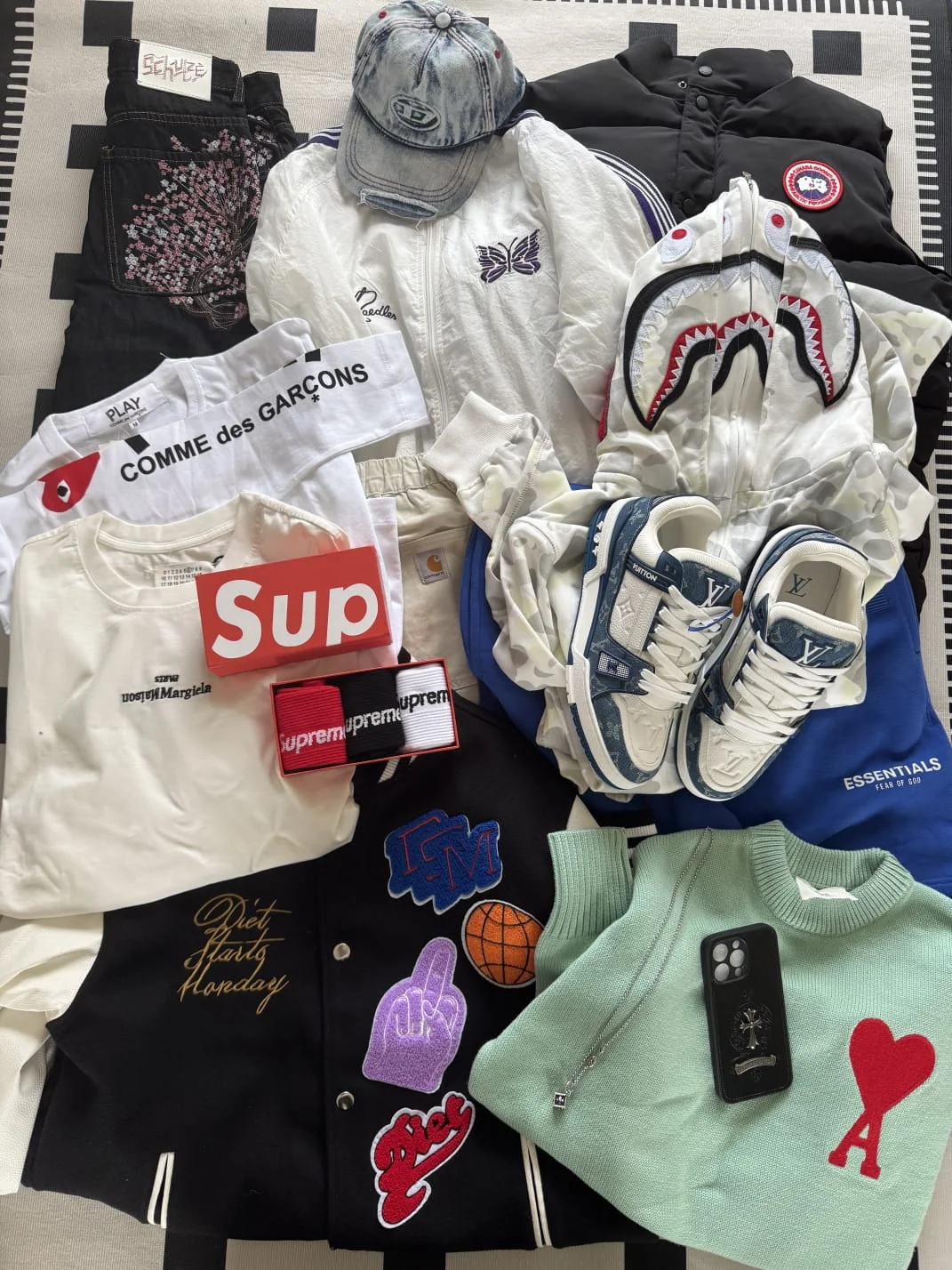
The first photo places the full group together. Black, off-white, blue, and mint green form the main palette, while red patches and embroidery act as accents. The white jacket, blue-and-white shoes, and light trousers create a lighter base; the black vest, varsity jacket, and dark denim add contrast. For styling, one statement piece can lead the outfit while simpler pieces keep the visible logos and graphics from competing.
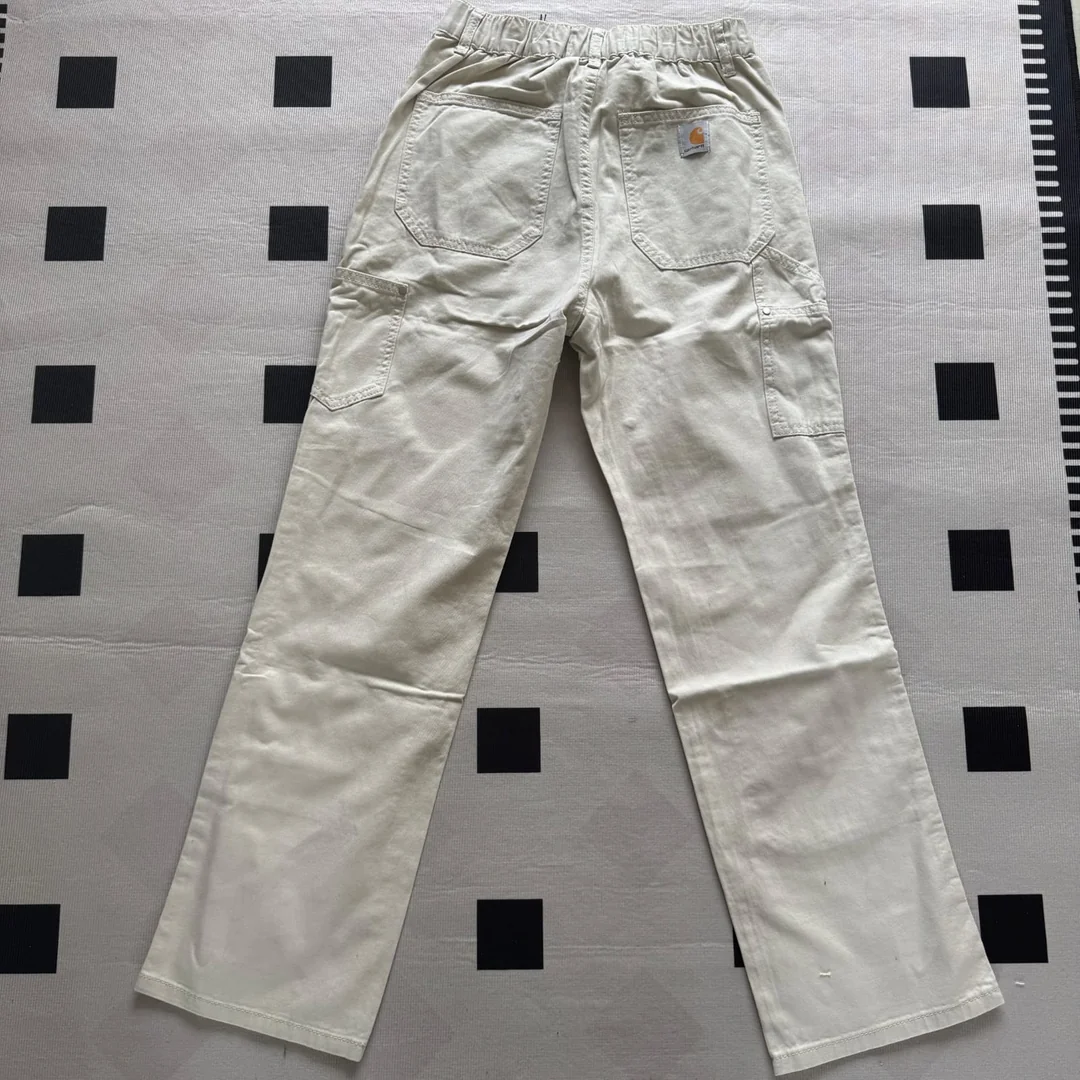
The trousers show an elasticated waistband, drawstring, rear pockets, side utility pockets, and relatively wide straight legs. The pocket layout is the main design feature, while the light color makes folds and stitching easy to see. Before buying a similar pair, check the expanded waist measurement, leg width, and pocket placement. This image does not show a size label or an on-body proportion.
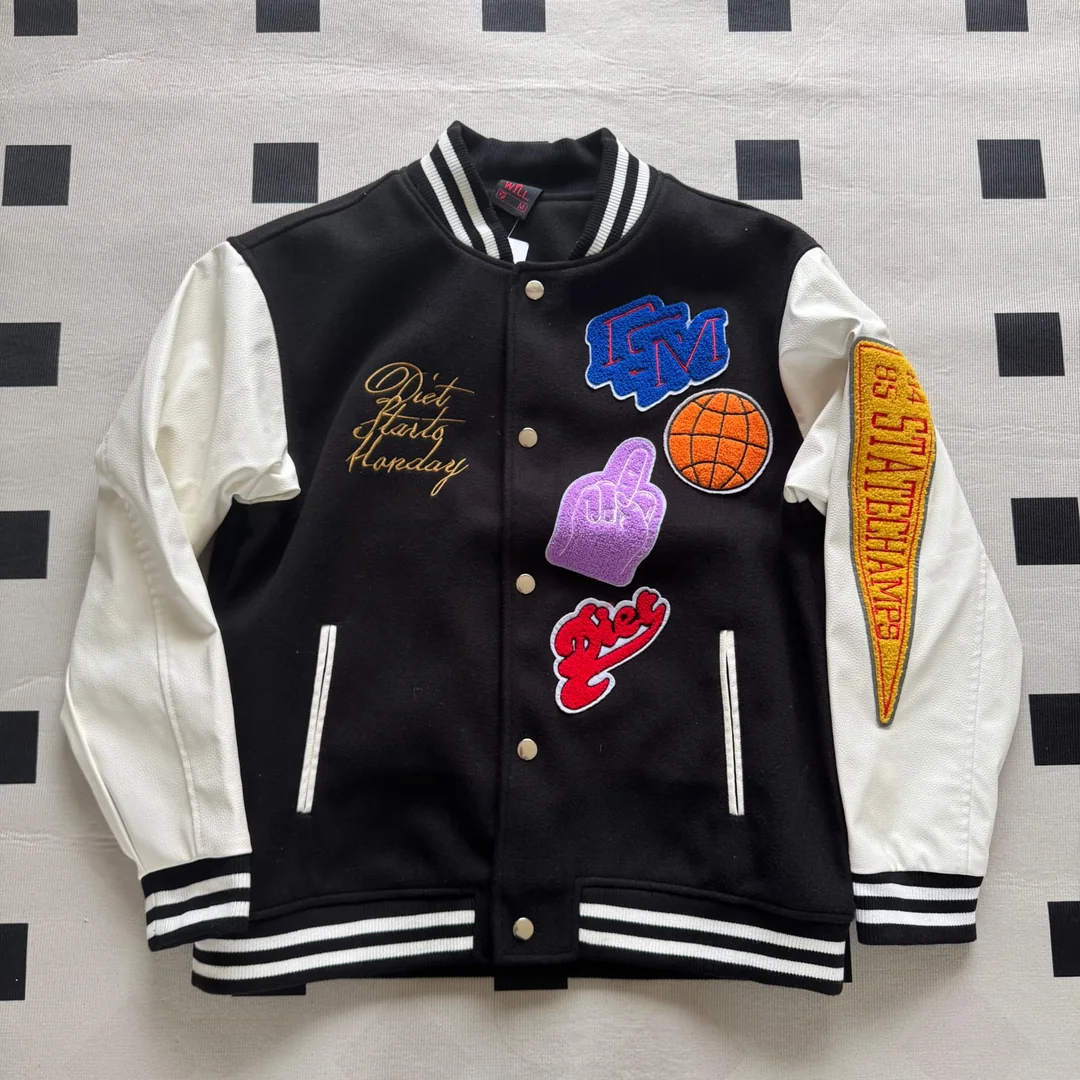
The jacket has a black body, white sleeves, and black-and-white ribbing at the collar, cuffs, and hem. Visible details include gold script, a blue-and-red letter patch, a basketball graphic, a purple hand patch, red lettering, and vertical yellow sleeve embroidery. It is a high-detail statement layer, so simpler trousers and a restrained base layer may create a cleaner balance.
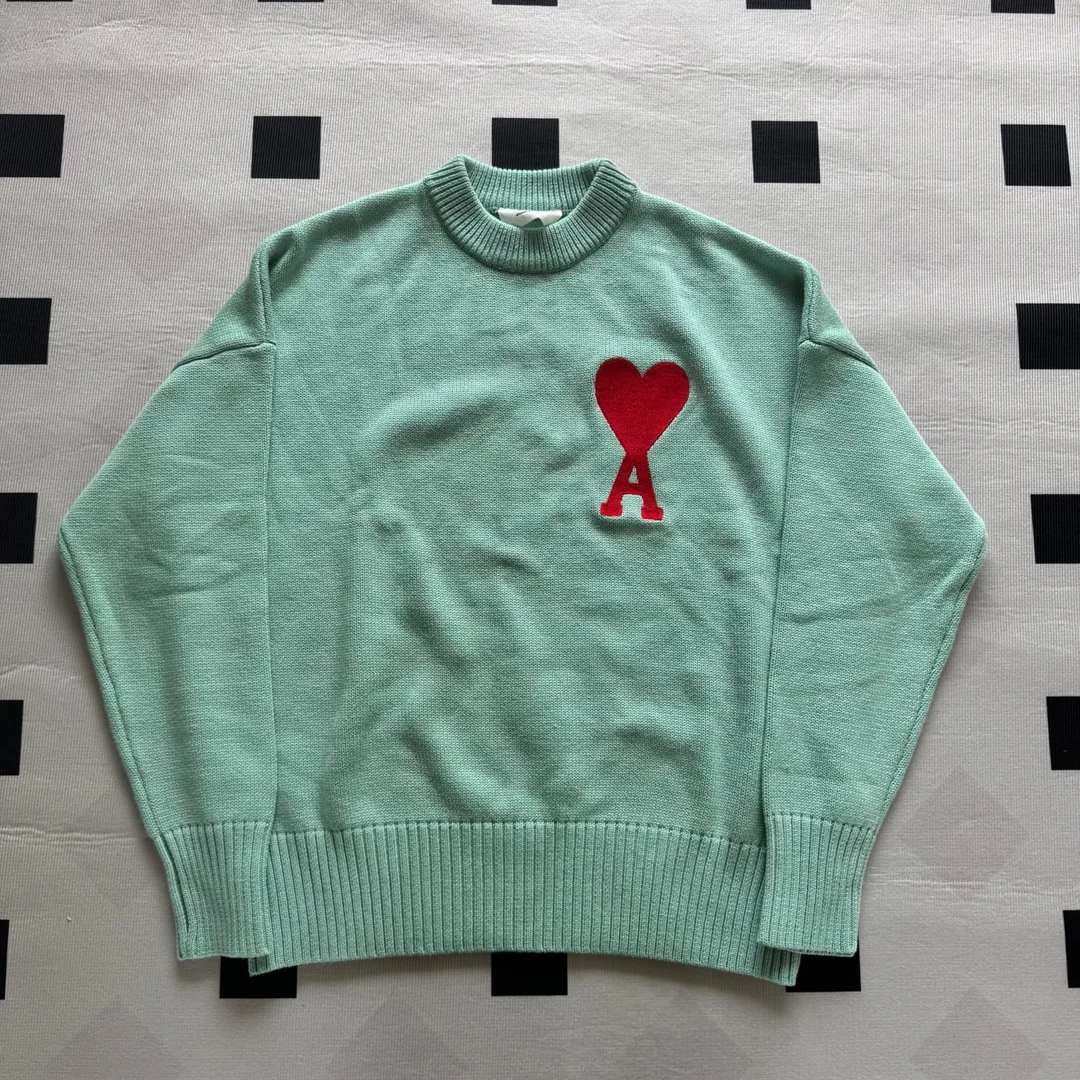
The mint-green sweater has a relatively clean front with a single red heart-and-"A" motif. Ribbing is visible at the collar, cuffs, and hem, and the flat lay suggests a relaxed-looking shape. It can work with black, off-white, or blue bottoms, using the red motif as a small color echo rather than adding more large graphics.
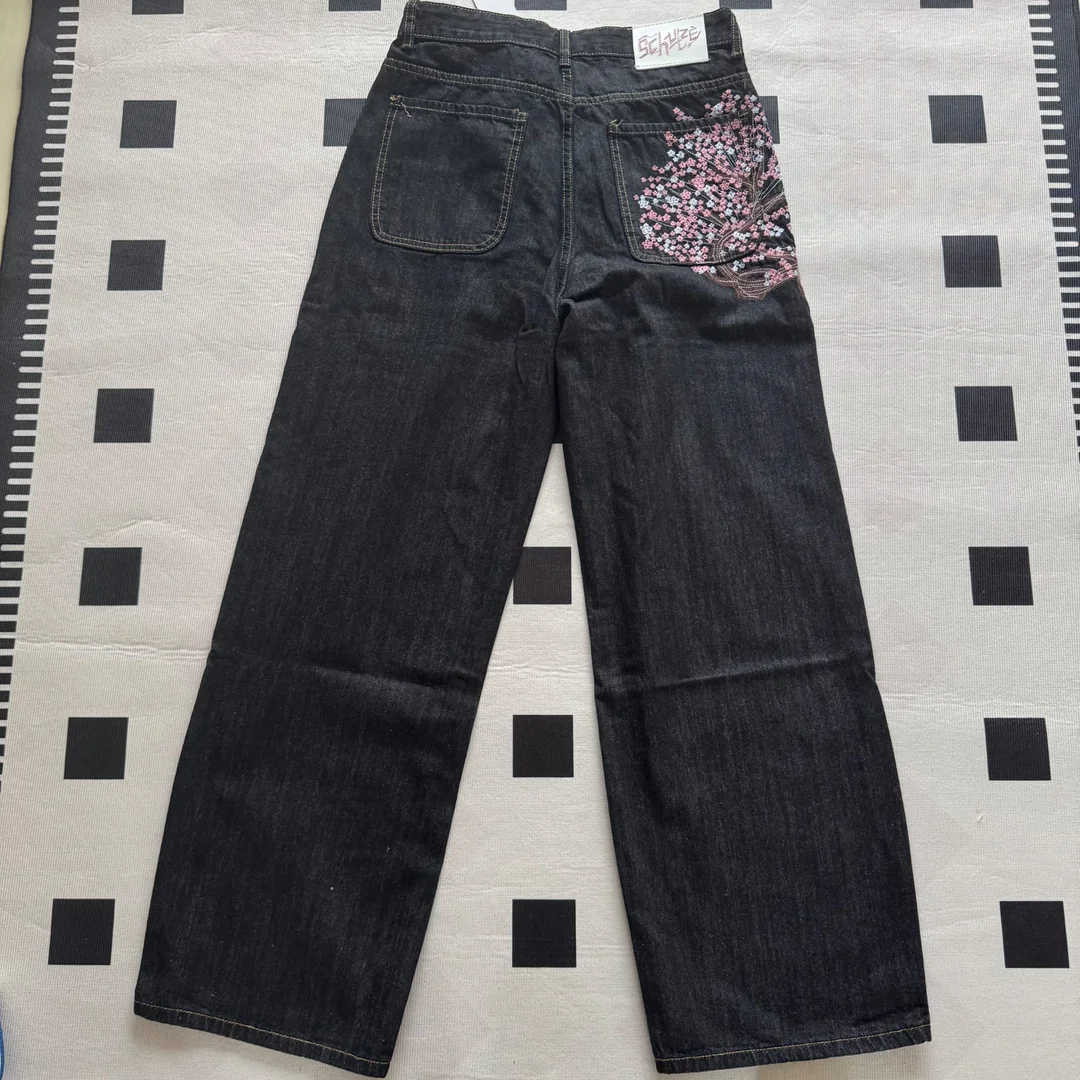
The dark jeans show two rear pockets, with pink floral and curved-line embroidery on one side. A readable label is visible at the waistband, and the legs appear fairly wide while the hems remain simple. The embroidery is the main focal point, so a plainer top can keep the back view balanced. Only the back is shown; the front pockets, rise, and waistband behavior cannot be judged here.
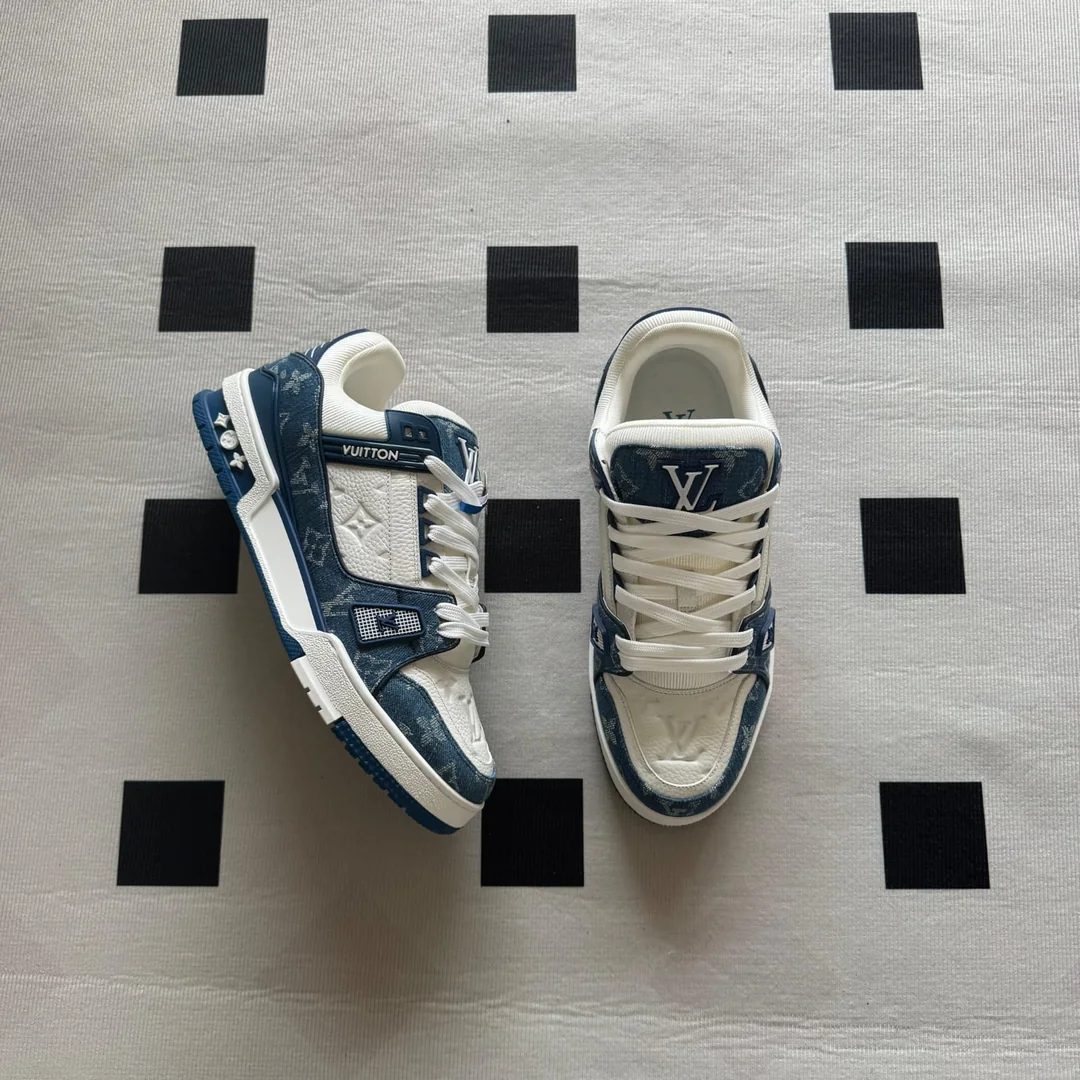
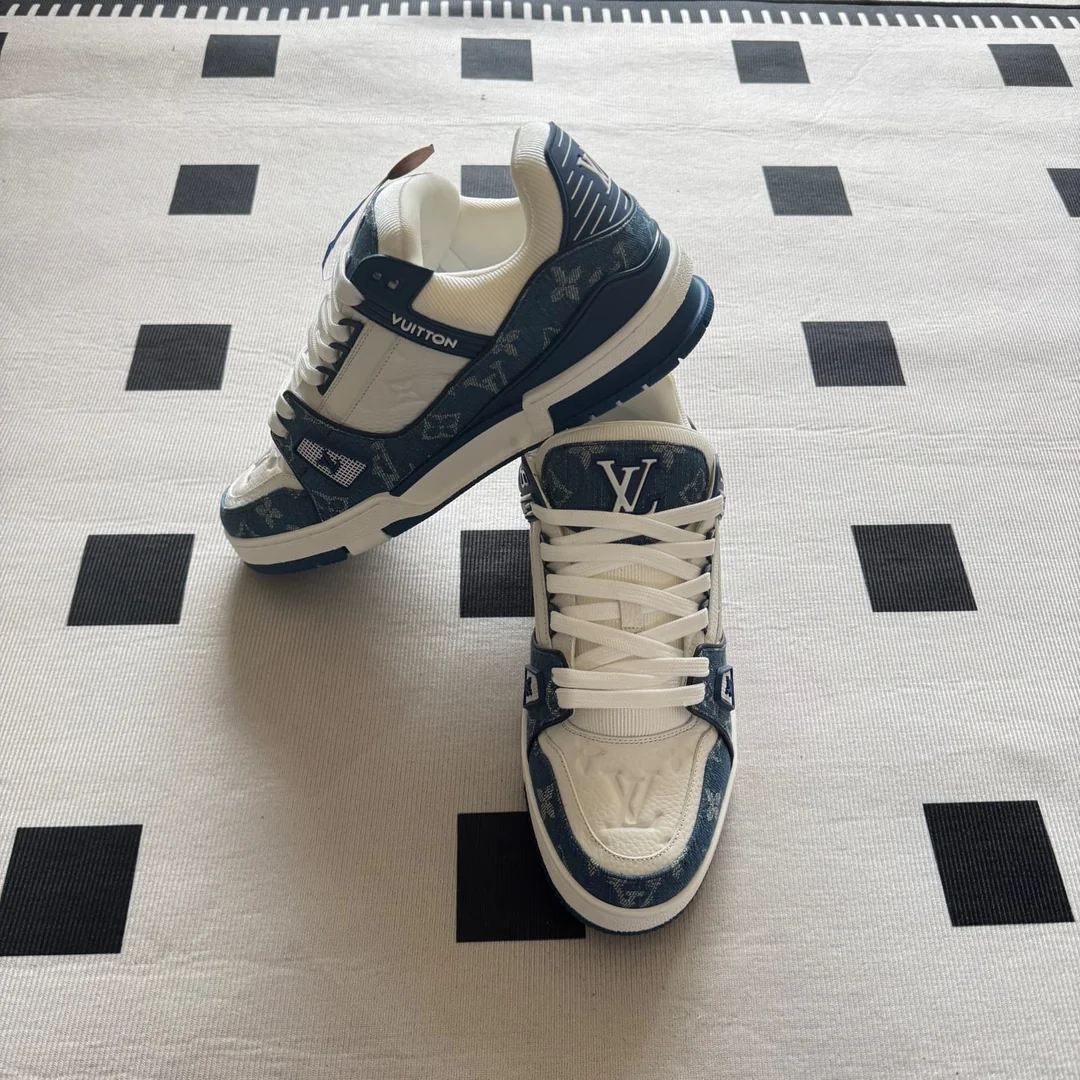
The sneakers use white and dark blue across the uppers, laces, tongues, side panels, and toe areas. The two shoes are placed at different angles, showing both the side construction and the tongue-and-toe details. The visible markings are described as shown in the image and do not establish authenticity or a specific model. Sole details, inner labels, and sizing are not visible.
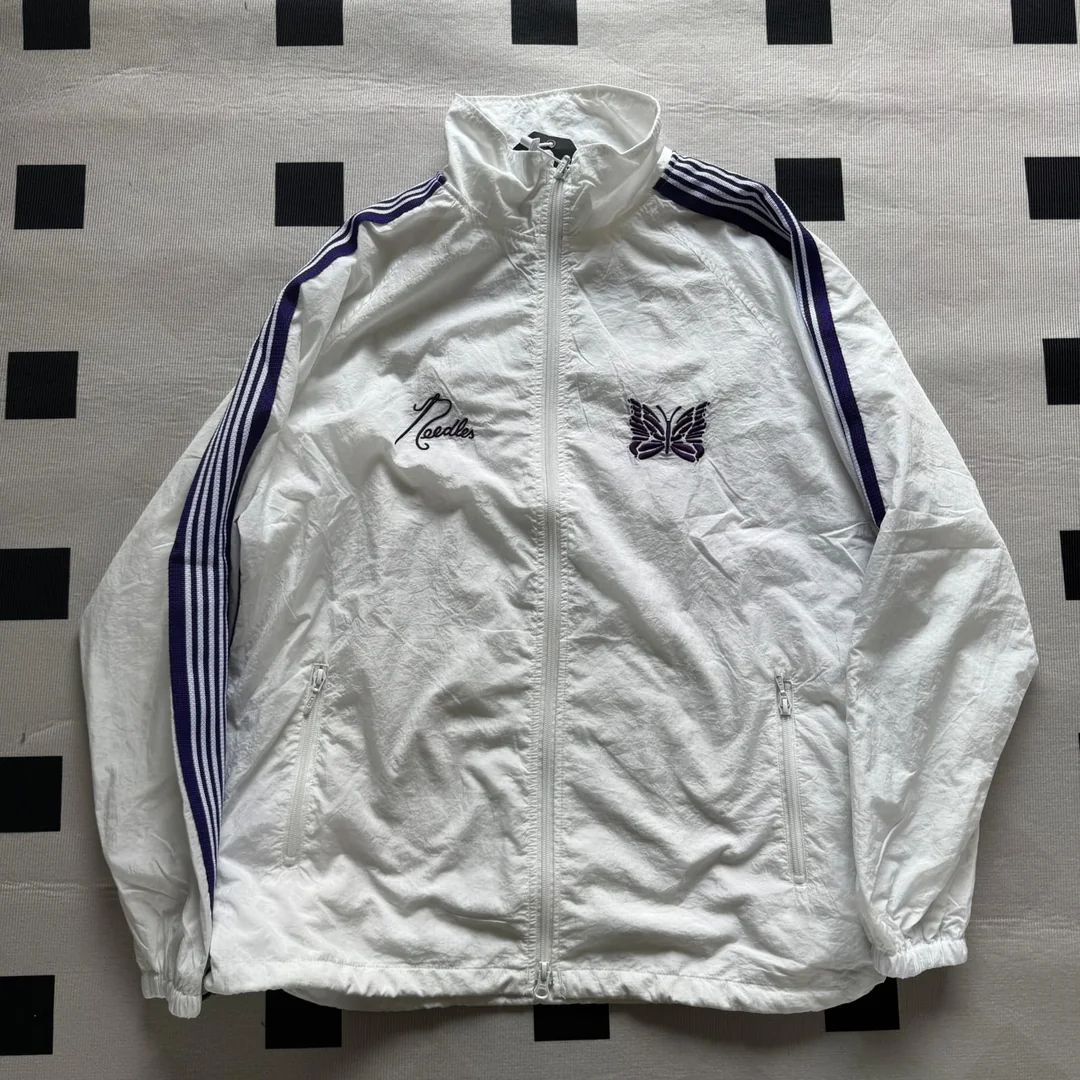
The white zip jacket has three purple stripes along the shoulders and sleeves, visible chest markings, a raised collar, and two zipped side pockets. The white base makes the purple lines the dominant directional detail. It would pair naturally with dark or blue bottoms. The flat lay shows the overall construction but not the worn length, sleeve length, or fit when zipped.
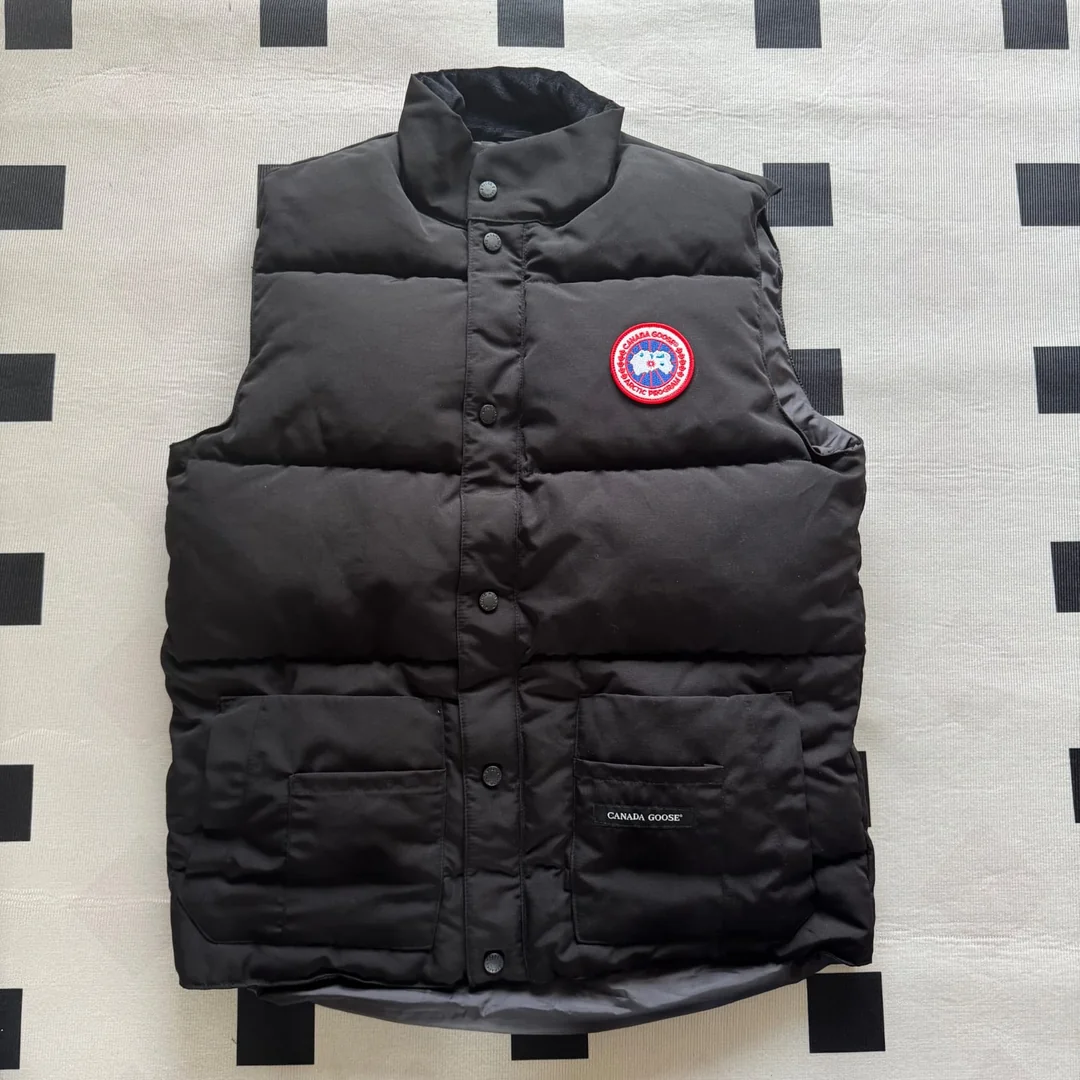
The black vest shows a stand collar, snap-front closure, horizontal padded sections, and two large lower flap pockets. A circular red-and-white chest patch and another small text mark near a pocket are visible. Its neutral color and clear pocket structure make it suitable as a layering piece. The lining, fill, and side thickness are not shown, so warmth and loft cannot be assessed.
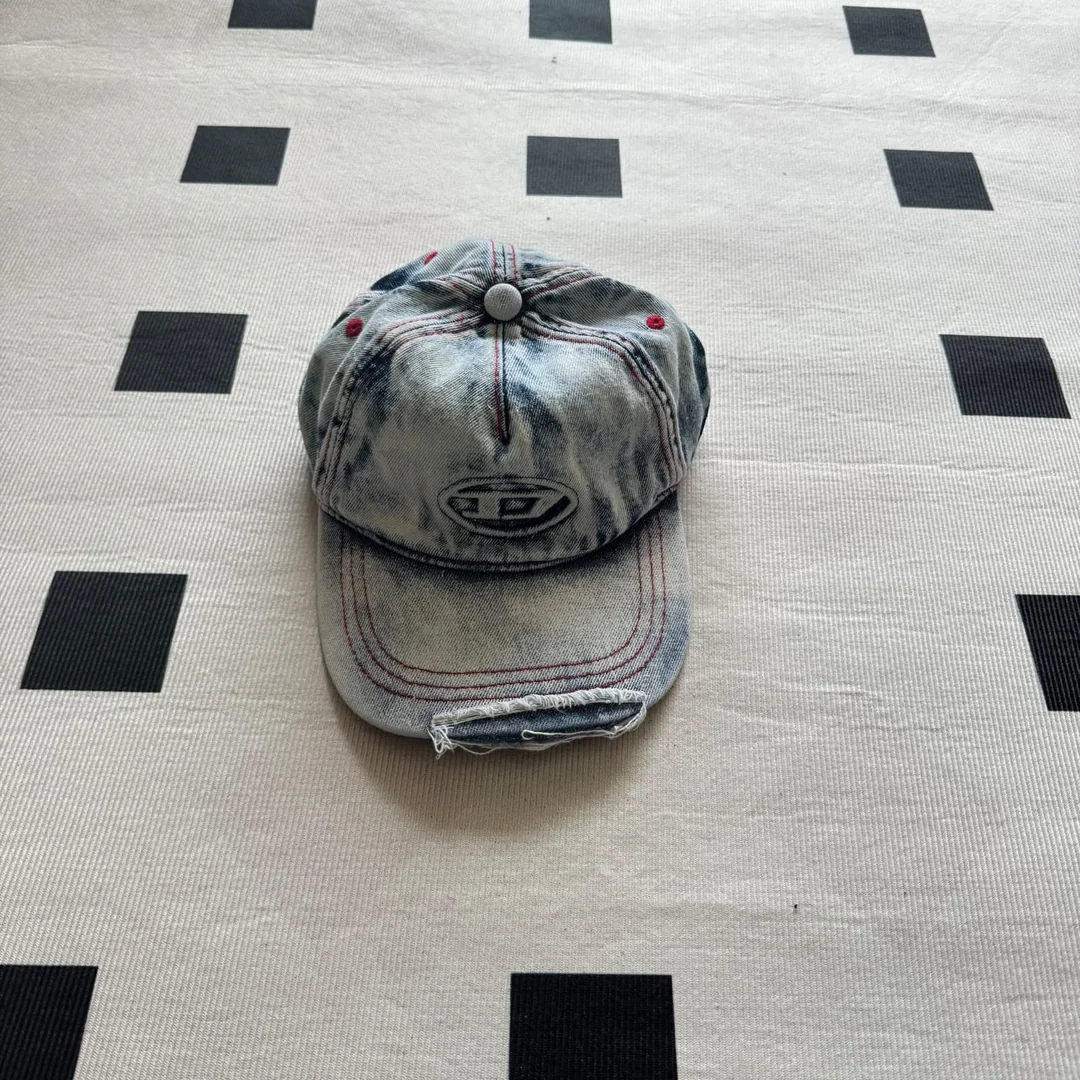
The cap has a light blue-gray distressed appearance, an oval front marking, red stitching, and a visibly worn-looking edge on the brim. It could add a vintage note to black, white, or blue outfits and echo the blue-and-white sneakers. The back adjustment system and head circumference are not shown.
This photo adds another view of the sneakers. The side shoe shows the heel, dark blue outsole, and side pattern, while the front-facing shoe shows the tongue, lace arrangement, and toe marking. Compared with the earlier image, this angle is more useful for comparing the silhouettes and color blocking than for judging comfort. Wear on the outsole, interior construction, and size remain unverified.
The second vest image gives a fuller view of the stand collar, snaps, horizontal sections, and two lower pockets. The circular chest patch and pocket text are easy to locate, keeping most decoration in the upper half of the garment. A white or light-gray base layer could brighten it; another large chest graphic may compete with the patch.
The cap detail shows uneven light-and-dark distressing, red stitching, and an oval front marking. The brim also has a worn-looking edge. This makes it a concentrated accent for a low-saturation outfit. The image only documents the front, so the adjustment, lining, and stability when worn cannot be judged.
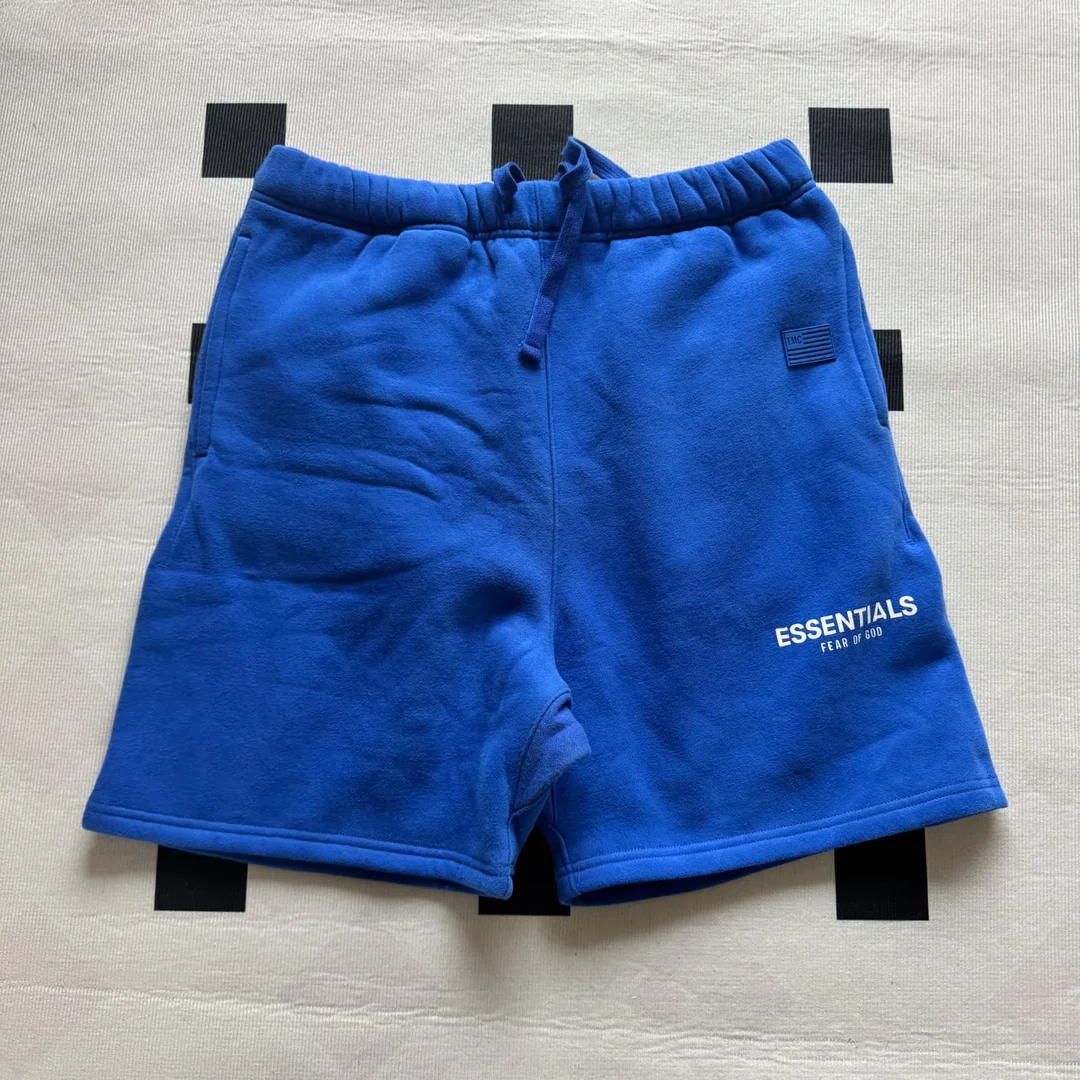
The blue shorts show an elastic waist, drawstring, side pockets, and white lettering on one leg. The saturated color can work with white, gray, or black tops and can also echo the dark blue in the sneakers. The back, measured length, leg opening, and rear-pocket layout are not shown.
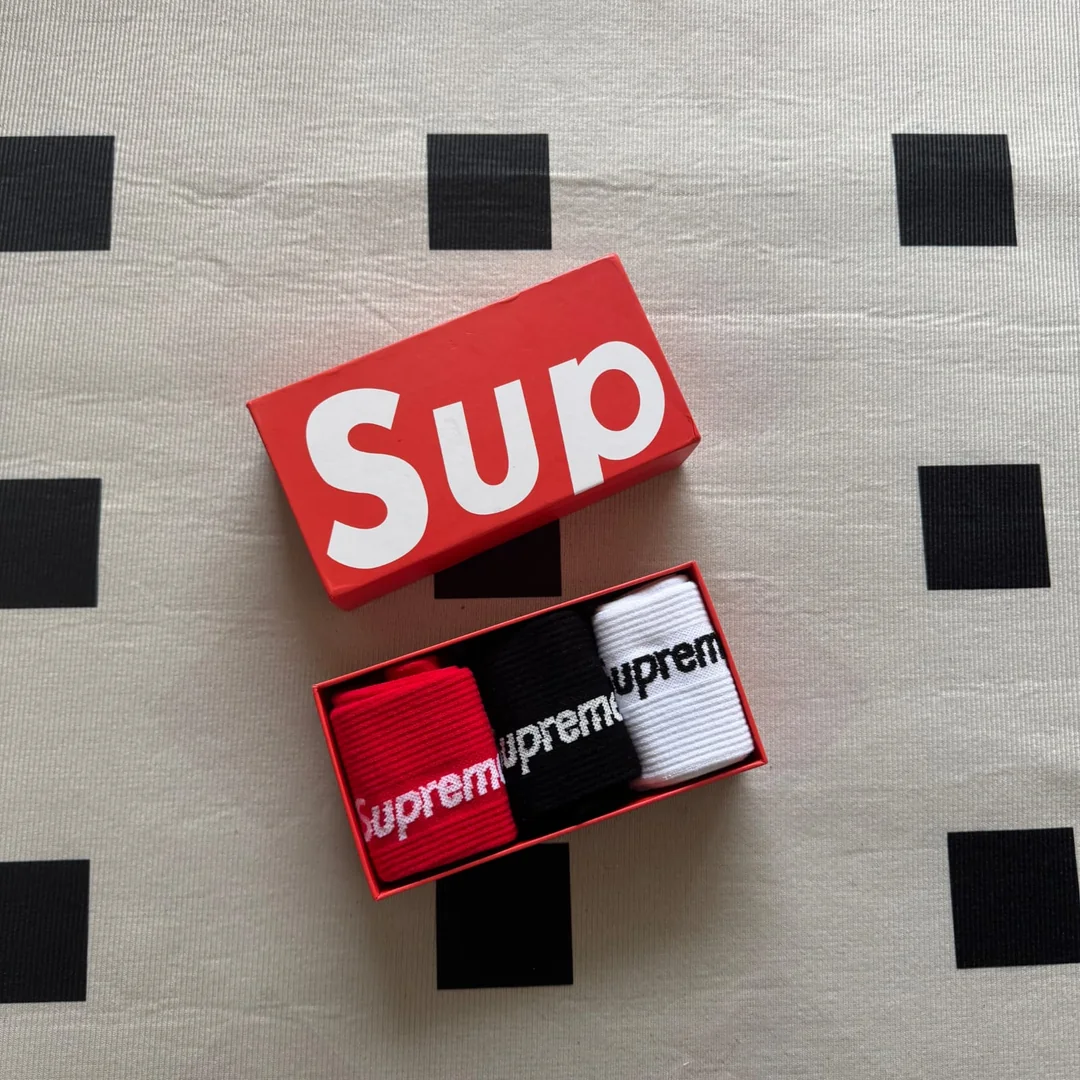
This image shows a red box and three pairs of socks in red, black, and white, with white lettering on the sock bodies. The visible subject here is the packaging, color arrangement, and placement of the printed marks; the package design is not evidence of performance or quality. For styling, red can repeat an accent from the cap or jacket, while black and white are easier to integrate with the rest of the set.
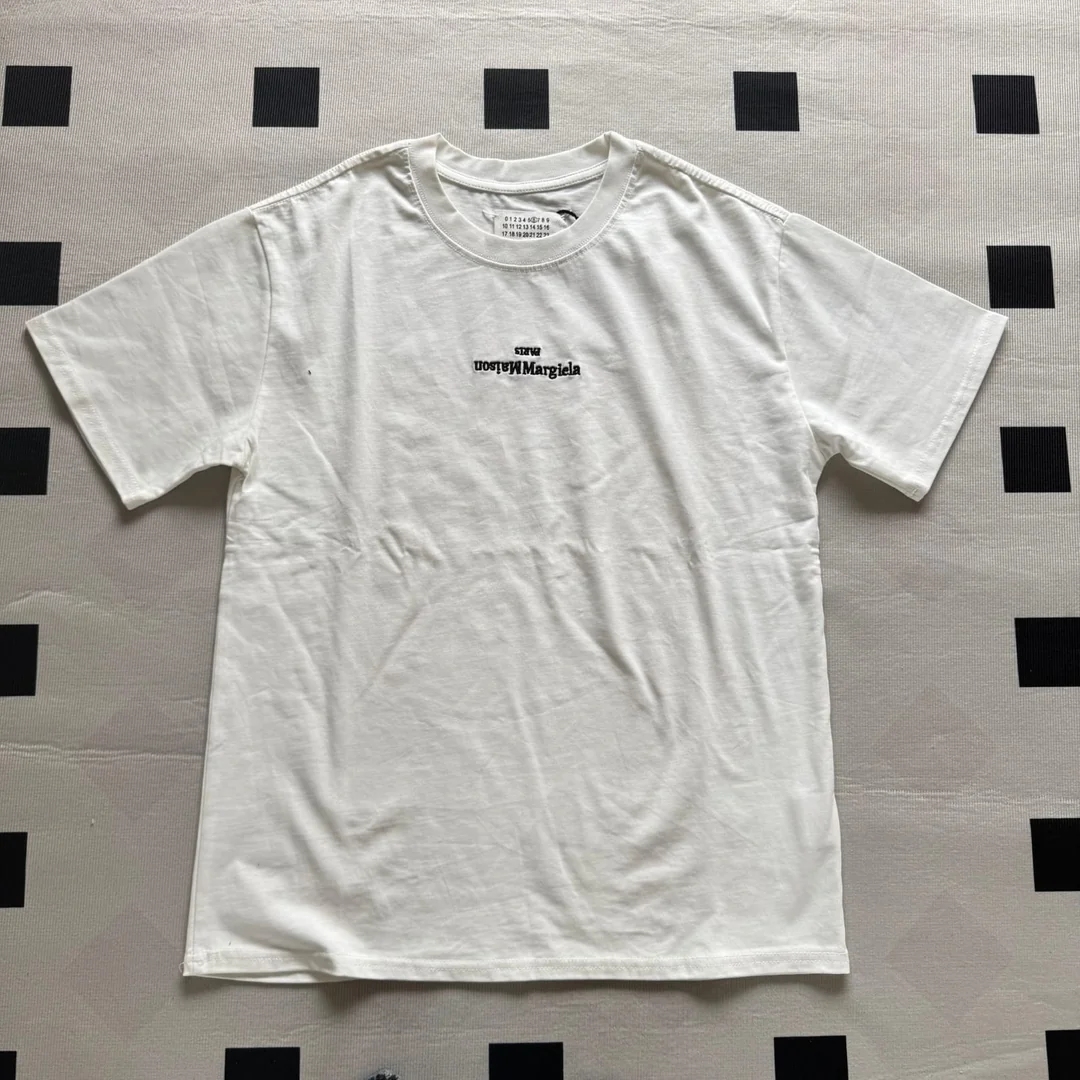
The white short-sleeve T-shirt has a simple front with a small chest marking and a basic collar and sleeve structure. It can serve as a quiet base under a patterned jacket, vest, or varsity layer. The image does not provide a size, fabric composition, opacity assessment, or wash history, so only the visible shape and graphic placement can be discussed.
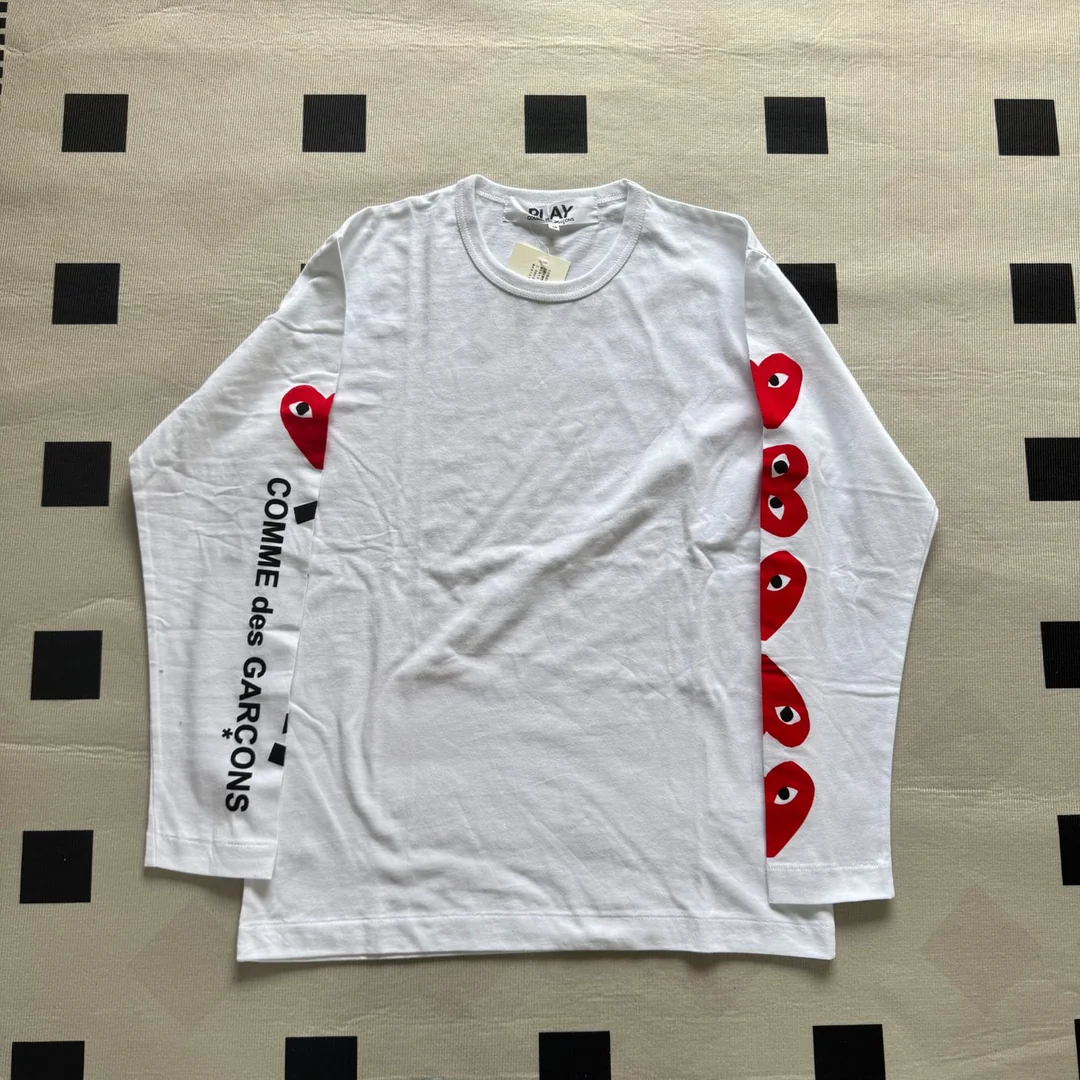
The white long-sleeve T-shirt places red heart-and-eye graphics along both sleeves, with vertical lettering visible at the sides while the chest remains relatively clear. The sleeve graphics are its defining visual feature. A simple bottom can keep them visible during layering or movement. The flat lay does not establish sleeve length or the amount of room when worn.
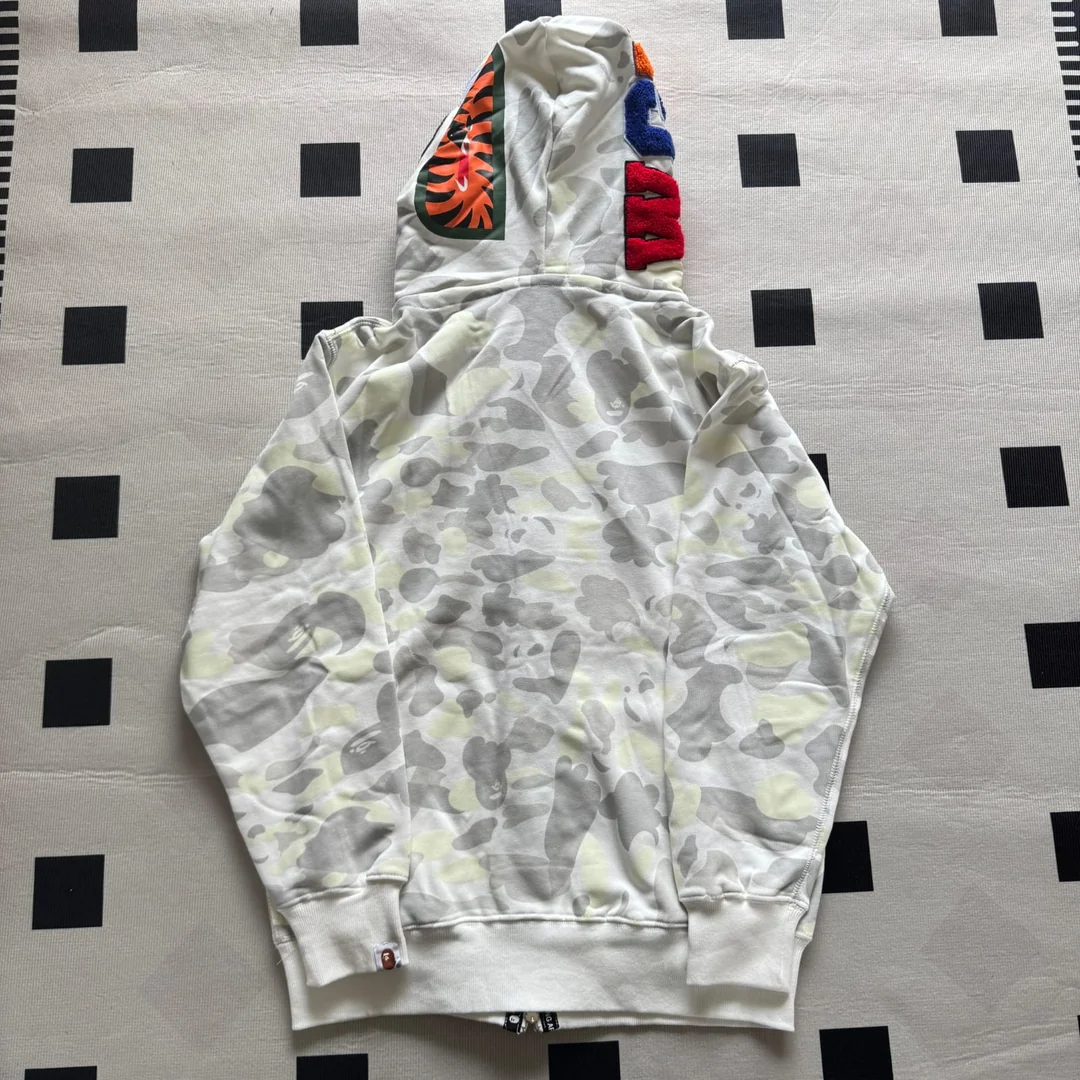
The back uses a light gray, white, and pale yellow camouflage pattern. Colorful patches or decorations appear around the hood and shoulder area, while the cuffs and hem have ribbed finishes. Because the back graphic is extensive, plain bottoms and quieter shoes may give the outfit more balance. This view does not show the front pockets, zipper details, or front markings.
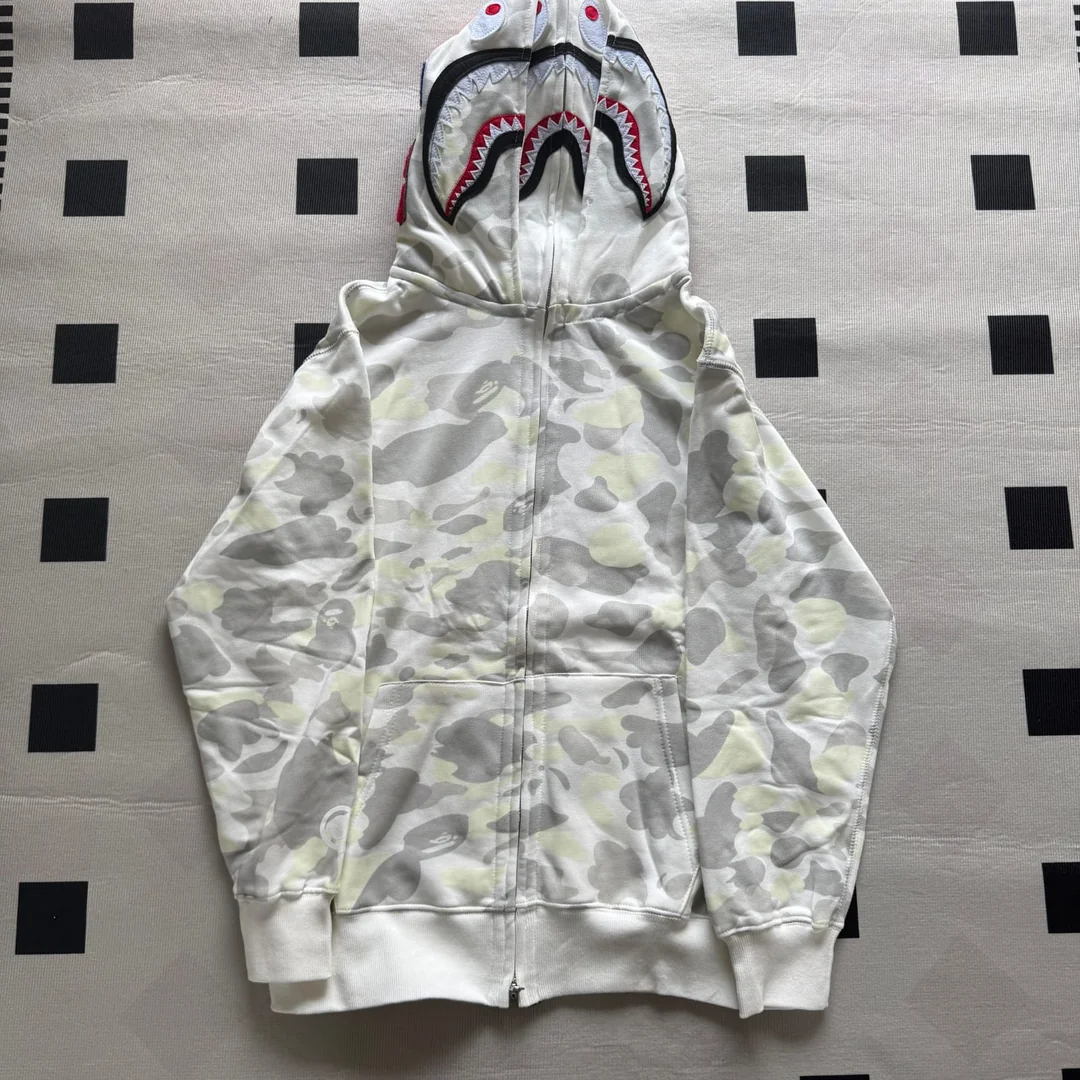
The front shows a full zip, hood, two side pockets, ribbed hem and cuffs, plus a prominent shark-tooth-style hood graphic with red, black, and white decoration. Compared with the back view, the front concentrates its strongest detail around the hood and creates a clear vertical line when zipped. Before buying a similar piece, inspect the hood shape when opened, the top of the zipper, and the cuff measurements. The photos cannot establish warmth, weight, or range of movement.
Overall, this set is most useful for judging color coordination, graphic density, and the placement of visible details. When considering similar pieces, focus on three practical checks: whether statement marks are clustered in one area, whether folds, stitching, and graphic placement on light garments match expectations, and whether the shoes, cap, and accessories repeat the set's blue, red, or black accents. These flat-lay photos cannot determine sizing, material, function, durability, or authenticity.
Daniel Reyes is Editor-in-Chief, covering cross-border shopping agents, QC photo review, warehouse consolidation, and shipping-line comparison. They write most of the agent-fee and shipping-line explainers, maintain the desk's five-point scoring standard, and sign off on every published score. Each review receives two checks: the order log of agent fee, QC time, shipping line, and arrival date, followed by the bench notes. Before a new score goes live, Daniel compares it with the last six months of retests, connecting the review's explanations, test records, and scoring checks.